
5 Micro-Influencer Campaigns Driving ROI
Micro-influencers deliver higher engagement and ROI—partner with niche creators, use promo codes and UGC, and repurpose content.
Micro-influencers deliver higher engagement and ROI—partner with niche creators, use promo codes and UGC, and repurpose content.
4.98 /5 - from 58k reviews
Trusted by 50,000+ creators — get real engagement delivered to your profile in minutes, not days.
Micro-influencers, with 10,000–100,000 followers, are proving to be a game-changer for brands. Why? They deliver 4.8% engagement rates on average (compared to 1.2% for macro-influencers) and a 3.1x ROI, all while being more affordable - typically charging $100–$1,000 per post. By focusing on niche audiences, brands like Gymshark, Glossier, HelloFresh, and Fashion Nova have turned small-scale partnerships into measurable results.
Here’s what works:
Pro Tip: Start small - collaborate with 10–20 niche creators, track conversions, and let their authentic tone shine.
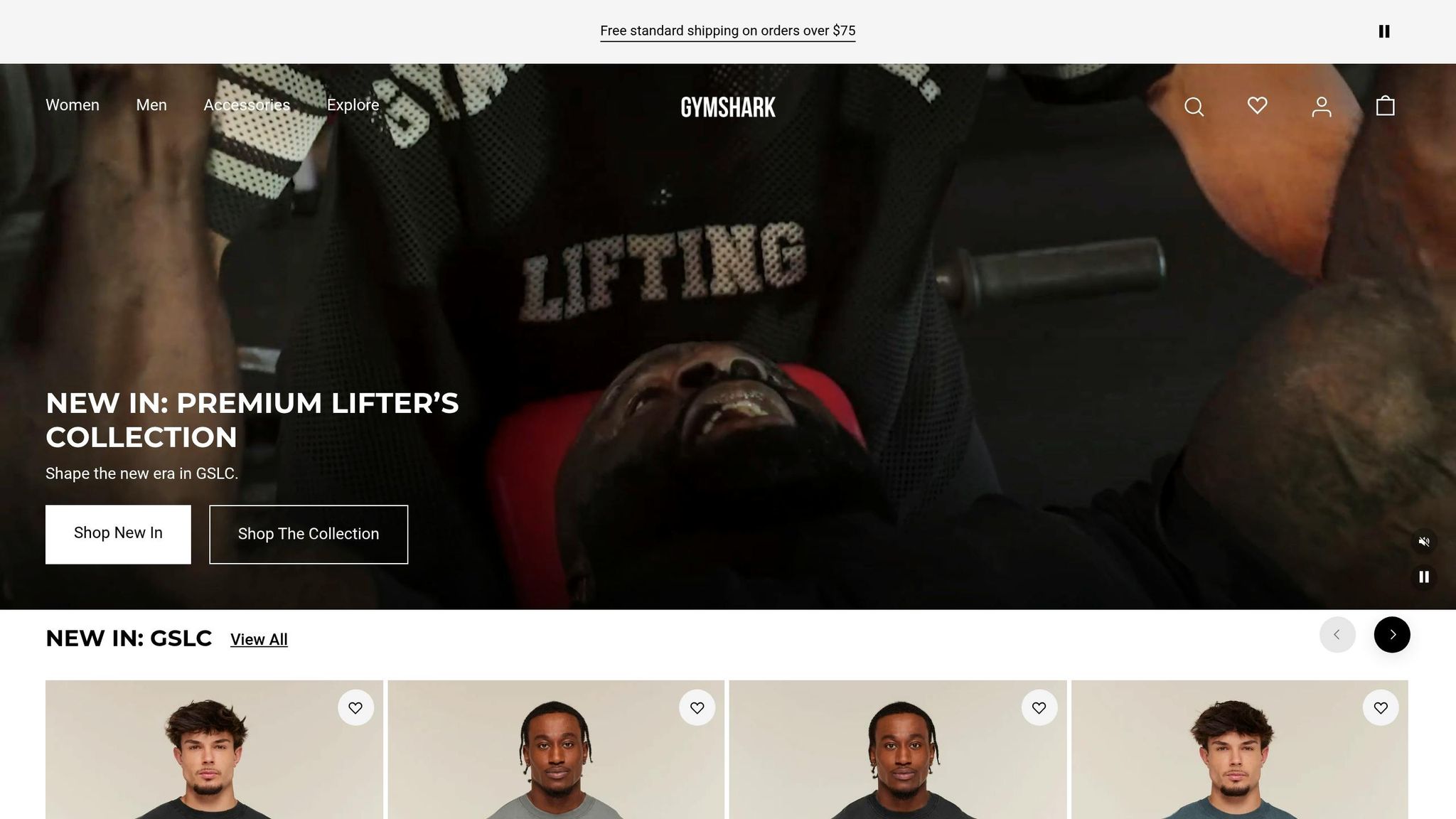
Back in 2012, Gymshark was just a small fitness apparel startup in the UK. Instead of splurging on TV ads or big-name celebrity endorsements, the brand took a different route. They turned to Instagram and YouTube to find fitness creators using an Instagram growth service with smaller, highly engaged audiences - people who genuinely lived and breathed the fitness lifestyle they were promoting.
Gymshark carefully chose creators whose content reflected values like transformation, discipline, and community. The goal wasn’t just to reach a massive audience but to connect with the right audience. When these creators recommended Gymshark products, it felt natural and authentic - more like a personal endorsement than a paid advertisement.
"Instead of 'sponsored product,' it becomes: 'This is what I wear.' That psychological shift matters." - Sougan Kumar Mandi, Founder, Peplio
What made this program stand out was its focus on long-term partnerships instead of one-off posts. Gymshark gave each ambassador a unique discount code, making it easy to track performance and measure influencer marketing results. They also invited influencers to live fitness events, creating opportunities for fresh content and building stronger connections with their audiences in person.
This approach paid off big time. Gymshark grew from a startup into a $1.4 billion brand - all without spending a dime on traditional TV ads. By leveraging micro-influencers, they built deeper loyalty and kept customer acquisition costs low. It’s a strategy that continues to prove its worth, with influencer marketing delivering an average return of $5.78 for every $1 spent. Gymshark’s success is a prime example of how micro-influencer campaigns can drive measurable and meaningful results.
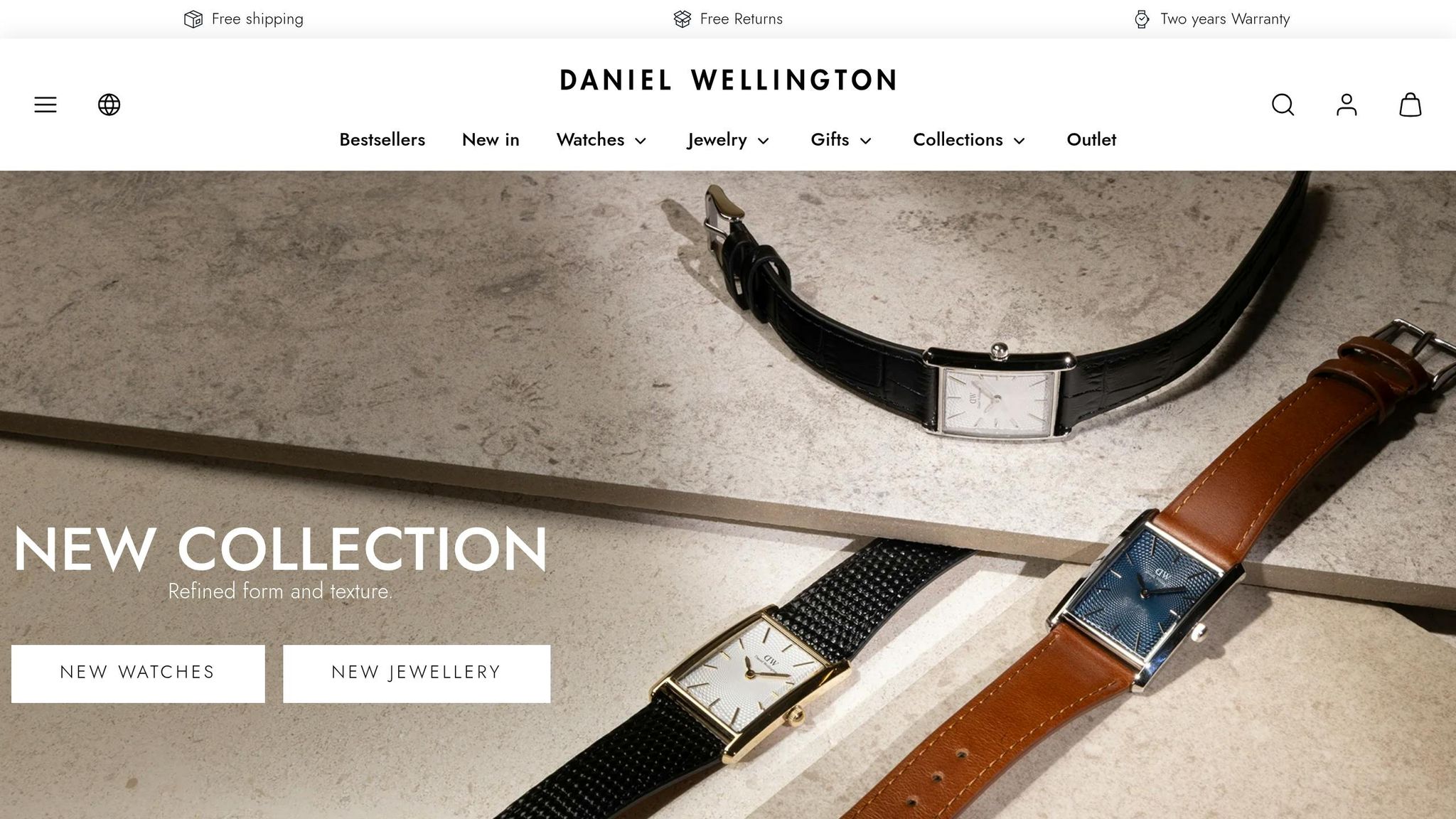
Back in 2011, Filip Tysander launched Daniel Wellington with just $20,000. Instead of banking on a single celebrity endorsement, he took a different route - partnering with numerous smaller Instagram creators to reach a wider and more trusting audience.
"He figured that the voices of several smaller influencers could be louder than one celebrity shoutout. He was right." - Nina Cresswell, Staff Writer, Influencer Update
The strategy was simple but effective: Daniel Wellington gifted free watches to nano- and micro-influencers in exchange for Instagram posts. Each influencer received a unique discount code (usually 15% off), which not only encouraged followers to buy but also helped the brand track sales directly tied to each partnership. Influencers had full creative freedom, resulting in posts that felt more like genuine lifestyle moments than traditional ads. For instance, micro-influencer Tiffaney Lau, with a modest following of about 4,600, shared a watch photo using her code and hit a 13.7% engagement rate - over 500 likes and 40 comments. This approach proved how effective smaller influencers could be in driving meaningful engagement.
To keep the momentum going, Daniel Wellington introduced the hashtag contest #DWPickoftheDay. This campaign invited anyone to post a photo featuring the brand for a chance to be featured on their official Instagram. The result? Customers became content creators, with user-generated content eventually making up as much as 90% of the brand's main Instagram feed. By involving their audience directly, the brand not only maintained authenticity but also strengthened its return on investment.
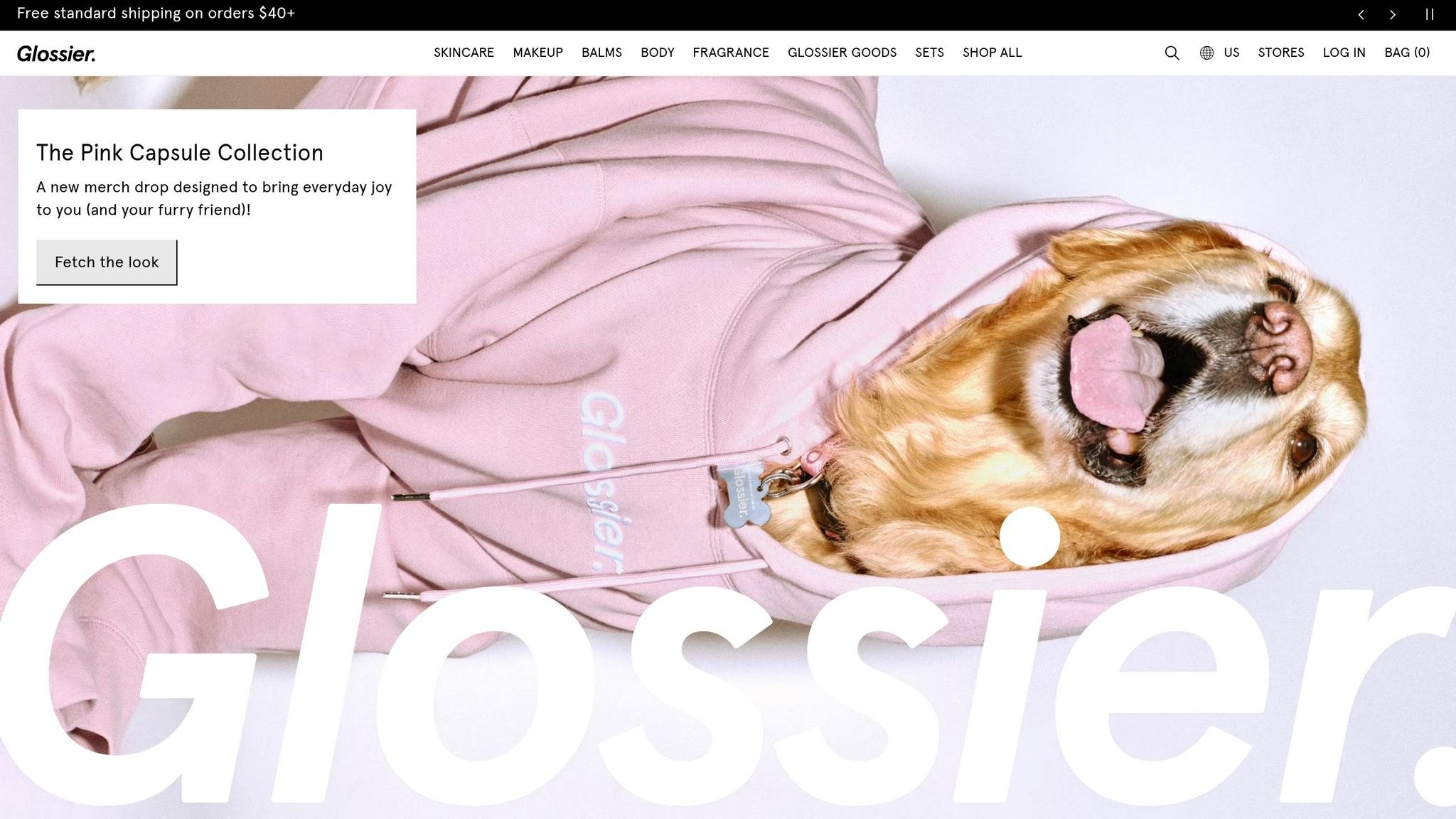
While many brands chase after influencers, Glossier took a different path - nurturing influencers from within their own customer base. Emily Weiss, the founder of Glossier, built the brand on the foundation of her beauty blog, Into The Gloss. From the start, the goal was clear: see every customer as a potential advocate. Glossier pinpointed its most engaged blog followers and loyal customers, inviting them into exclusive Slack groups to chat about beauty trends and share direct feedback on products. These weren’t just passive fans - they became insiders, receiving early access to new products and playing a key role in shaping launches.
"At Glossier, something we've always stayed very true to, since pre-launch, day one, is that every single person is an influencer." - Emily Weiss, Founder and CEO, Glossier
This community-first approach has consistently delivered results. One standout example is the 2016 launch of The Supers serum. Glossier sent the product to 150 of its most active community members three weeks before the official release - without any content requirements. The result? Over 400 organic Instagram posts and 10,000 likes on Glossier's introductory post. Fast forward to 2024, and the brand’s micro-influencer campaign delivered a 25% boost in sales and 1 million impressions across social platforms. Partnering with creator agency Kyra, Glossier activated 51 nano and micro-creators, generating over 300 pieces of unscripted content that racked up 115 million views. The power of this strategy is clear: around 70% of Glossier’s online sales come from peer-to-peer referrals, and community members purchase three times more often than non-members.
On Instagram, Glossier’s content stood out by prioritizing authenticity over perfection. Instead of glossy, studio-shot images, the brand embraced realness. They showcased real skin, natural lighting, and candid selfies, leaning into the “proof over polish” mantra. Community hashtags like #GlossierGirl and reposted customer “shelfies” kept the engagement flowing naturally and consistently.
HelloFresh took a page from campaigns like Gymshark and Daniel Wellington, using micro-influencer collaborations to turn social engagement into actual revenue. Their goal wasn’t just gaining followers - it was about converting them into paying subscribers. To achieve this, they shifted focus from high-profile influencers to everyday cooks, creating relatable and authentic meal-sharing experiences. Learning how to connect with influencers who align with your brand values is key to this strategy.
Their strategy revolved around "social sampling" - offering influencers free meal kits in exchange for content. This approach, often referred to as contra partnerships, allowed HelloFresh to avoid upfront payments. In one Australian campaign managed by The Influencers Agency, 44 lifestyle creators participated (26 with over 10,000 followers and 18 with under 10,000). Each influencer received four weeks of free meals in return for one post and three Stories. The results? This campaign reached 586,400 followers, generated 160 unique pieces of content, and pulled in over 15,000 likes and comments.
In another campaign with The Influence Room, HelloFresh engaged 124 micro-influencers, prioritizing creators who were already fans of the brand. These influencers delivered 903 pieces of content - mostly Reels and Stories - reaching 1.7 million people and creating an estimated $120,000 in Earned Media Value. The campaign's success was rooted in its clear and consistent messaging, which emphasized convenience, healthy eating, and family-friendly meals. As The Influence Room highlighted:
"By establishing clear guidelines and key messaging in their campaign brief, the brand was able to ensure consistency with the content produced."
HelloFresh didn’t just stop at organic reach. They repurposed this user-generated content (UGC) for paid ads, turning it into a long-lasting marketing asset. On TikTok, for instance, they managed 200–300 influencer collaborations per month. This approach slashed their customer acquisition cost (CAC) by 30% in markets like the UK, Canada, and Australia. The campaign also delivered 5 million video views per month and over 500 tracked monthly sales through promo codes. Nicolas Arias, Global Team Lead – Influencer Marketing at HelloFresh, praised the strategy:
"House of Marketers has been the only partner that has truly help us develop a performance-driven, strategic and global approach to TikTok."
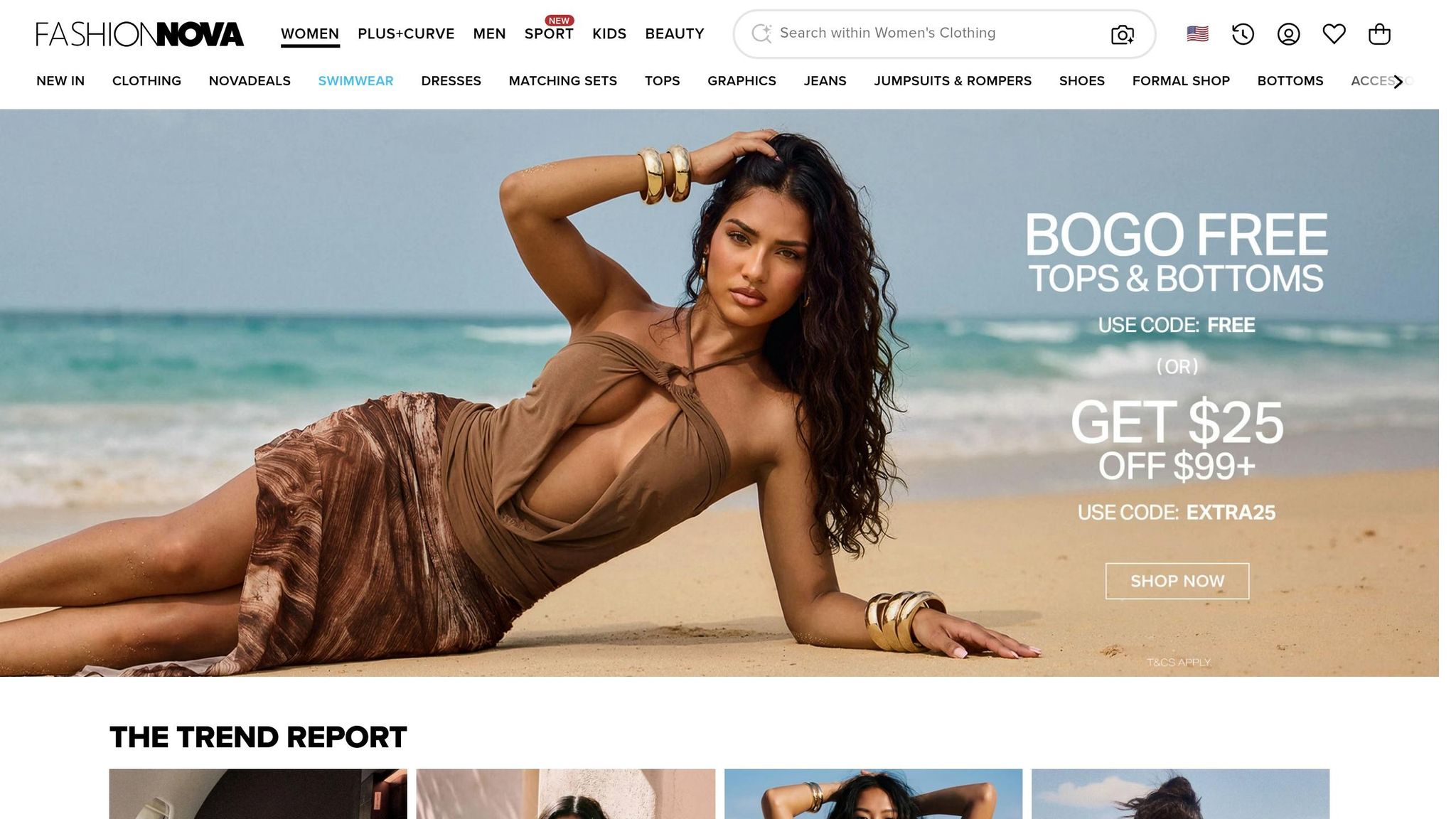
Fashion Nova has mastered the art of Instagram visibility. While celebrities like Cardi B bring massive exposure and cultural relevance, the brand’s real secret weapon lies in its use of micro-influencers. These influencers, often with just 6,000 to 10,000 followers, create content that feels personal - like advice from a trusted friend. Jonathan Chanti, SVP of Sales at InfluencerDB, summed it up perfectly:
"There's one to three degrees of separation between my follower and me, so they feel like they know this person, trust this person and see it as word of mouth. That's essentially what Fashion Nova has been doing, which is brilliant: figure out how to marriage micro influencers with some big mainstream people like Cardi B."
Fashion Nova streamlines its influencer program with automated Instagram tools. Influencers can select up to 15 items (each typically priced at $75 or less) through a portal in exchange for four Instagram feed posts and four Stories per month. Captions follow a simple template: a short intro, a tag to @FashionNova, and a "🔍 [Product Name]" callout so followers can easily find the exact item on the website. Hashtags like #NovaSwim, #NovaCurve, and #NovaMen help categorize content by product type, making it easier for the brand to track performance down to individual SKUs.
This scalable approach delivers measurable results. Back in 2018, Fashion Nova collaborated with 1,072 influencers, resulting in 1.9 billion likes and an Earned Media Value (EMV) of $588 million. Fast forward to a more recent 12-month period, and the brand sponsored 108,500 pieces of influencer content - with Instagram making up 52.7% of the total (57,200 posts). One standout example? In February 2026, a single "Get ready with me" post by creator sosazerafa racked up 6.6 million views and an estimated $254,000 in EMV. The brand also benefits from loyalty within its influencer network: 16% of its 25,300 unique influencers posted sponsored content in three or more months during the same year.
Fashion Nova doesn’t let this content go to waste. Influencer posts are quickly repurposed for product page galleries, paid social ads, and email campaigns, cutting down on the need for expensive studio shoots. It’s a self-sustaining system: micro-influencers generate relatable content, that content drives sales, and the best-performing posts are reused across paid channels to amplify results even further.
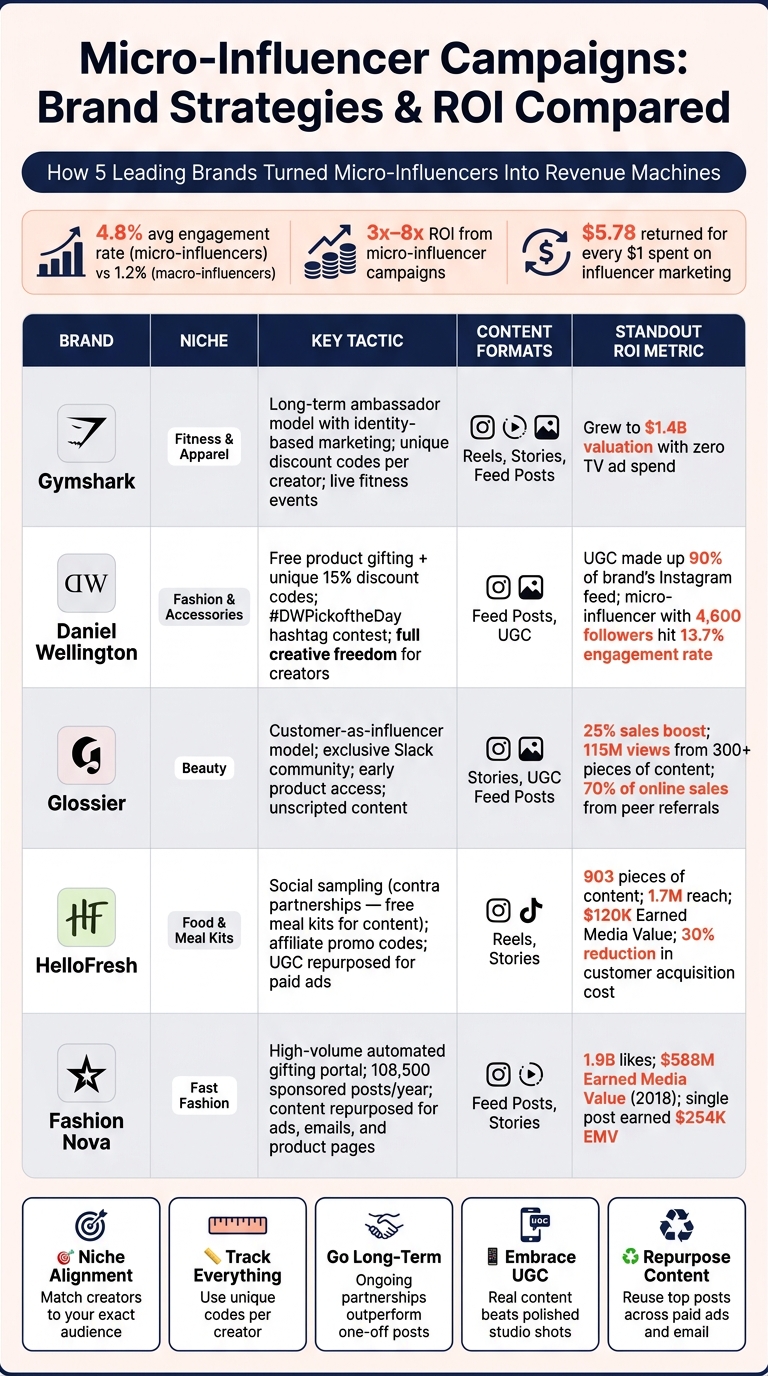
Micro-Influencer Campaigns: Brand Strategies & ROI Comparison
Building on the examples above, these campaigns used relatable content and focused tracking to measure success. Here's a breakdown of the key elements for each campaign:
| Brand | Niche | Instagram Formats | Key ROI Metric | Primary Tactic |
|---|---|---|---|---|
| Gymshark | Fitness & Apparel | Reels, Stories, Feed Posts | $1.4B valuation with zero TV ad spend | Long-term ambassador model; identity-based marketing |
| Glossier | Beauty | Stories, UGC Feed Posts | Strong impact from peer referrals | Community-driven UGC; rep program with store credit |
| HelloFresh | Food & Meal Kits | Reels, Stories | Significant tracked referral revenue | Recipe Reels; affiliate codes per creator |
| Fashion Nova | Fast Fashion | Feed Posts, Stories | High earned media value and strong engagement | High-volume gifting; use of automated tracking tools |
Several key trends stand out from these campaigns:
These patterns highlight the growing importance of micro-influencers and UGC in driving results, while also showing how strategic reuse of content can amplify a campaign's impact.
Looking at the successes of brands like Gymshark and Fashion Nova, a pattern starts to emerge. The standout campaigns all share three key elements: alignment with a niche audience, measurable incentives, and diverse content formats. Gymshark built its brand by connecting with fitness enthusiasts. Glossier transformed its customers into creators. HelloFresh and Fashion Nova used affiliate codes to directly link posts to revenue. Each of these brands began with a focused plan and expanded based on what delivered results.
Here’s an important takeaway: micro-influencers with 10,000–100,000 followers achieve an average 4.8% engagement rate, compared to just 1.2% for mega-influencers. On top of that, their campaigns often deliver a 3x–8x ROI. This difference gives brands a clear edge when they choose the right creators.
"Volume of niche creators with consistent briefs beats one big-name post every time. A thousand small voices create more social proof than one loud one." - Katja Orel, Lead Editor, Influee
The best way to start? collaborate with 10–20 creators in a specific niche and establish an efficient Instagram influencer workflow. Track every conversion, and let creators have enough freedom to keep their content authentic. Posts that align with a creator’s natural tone perform 30–40% better than overly polished brand messaging.
For brands scaling this strategy on Instagram, tools like UpGrow can streamline the process. With AI-driven targeting and real-time analytics, platforms like these simplify audience segmentation by factors like location, age, gender, and language. Plus, live dashboards ensure campaign performance is monitored around the clock.
When searching for micro-influencers, it’s better to focus on content themes rather than broad categories. Start by using social media tools to pinpoint creators who are actively posting about topics related to your industry. Once you’ve identified potential influencers, narrow your search to those with follower counts in the range of 15,000 to 75,000.
Next, evaluate their profiles carefully. Look for consistent posting schedules, strong engagement-to-follower ratios, and evidence of genuine product usage. Another key step? Dive into their comment sections. Pay attention to signs of purchase intent - comments like questions about pricing or product availability can indicate an audience that’s ready to take action.
To measure ROI accurately, you need a multi-faceted attribution approach before starting your campaign. Here's how you can do it:
Make sure to define your conversion goals upfront. For campaigns focused on driving sales, prioritize metrics like ROAS (Return on Ad Spend) or CPA (Cost Per Acquisition) to evaluate performance.
To authentically repurpose influencer content, focus on preserving the creator's unique voice. Instead of providing rigid scripts, share key messaging points that allow them to stay true to their style. Avoid simply copying content across platforms - adjust elements like hooks, pacing, and calls-to-action to fit each platform's audience and format.
Use high-performing organic content as a foundation for paid ads, testimonials, or social proof. This approach builds on the trust the influencer has already established with their audience. Before repurposing, always secure the necessary commercial usage rights to stay compliant and maintain flexibility in how the content is used.


