
Ultimate Guide to Seasonal Hashtag Libraries
Seasonal hashtag libraries make Instagram posts timely and discoverable—mix broad, niche and location tags, rotate lists, and use AI tools for better engagement.
Seasonal hashtag libraries make Instagram posts timely and discoverable—mix broad, niche and location tags, rotate lists, and use AI tools for better engagement.
4.98 /5 - from 58k reviews
Trusted by 50,000+ creators — get real engagement delivered to your profile in minutes, not days.

Seasonal hashtag libraries are collections of hashtags tied to specific holidays, seasons, and events. They help your Instagram posts gain visibility by connecting them to trending, time-sensitive topics. Using the right seasonal hashtags can increase engagement by 12.6% and align your content with moments when users are actively searching for related posts. For instance, hashtags like #ValentinesDay2026 or #FirstDayOfSpring can make your content more discoverable and relevant.
Key Takeaways:
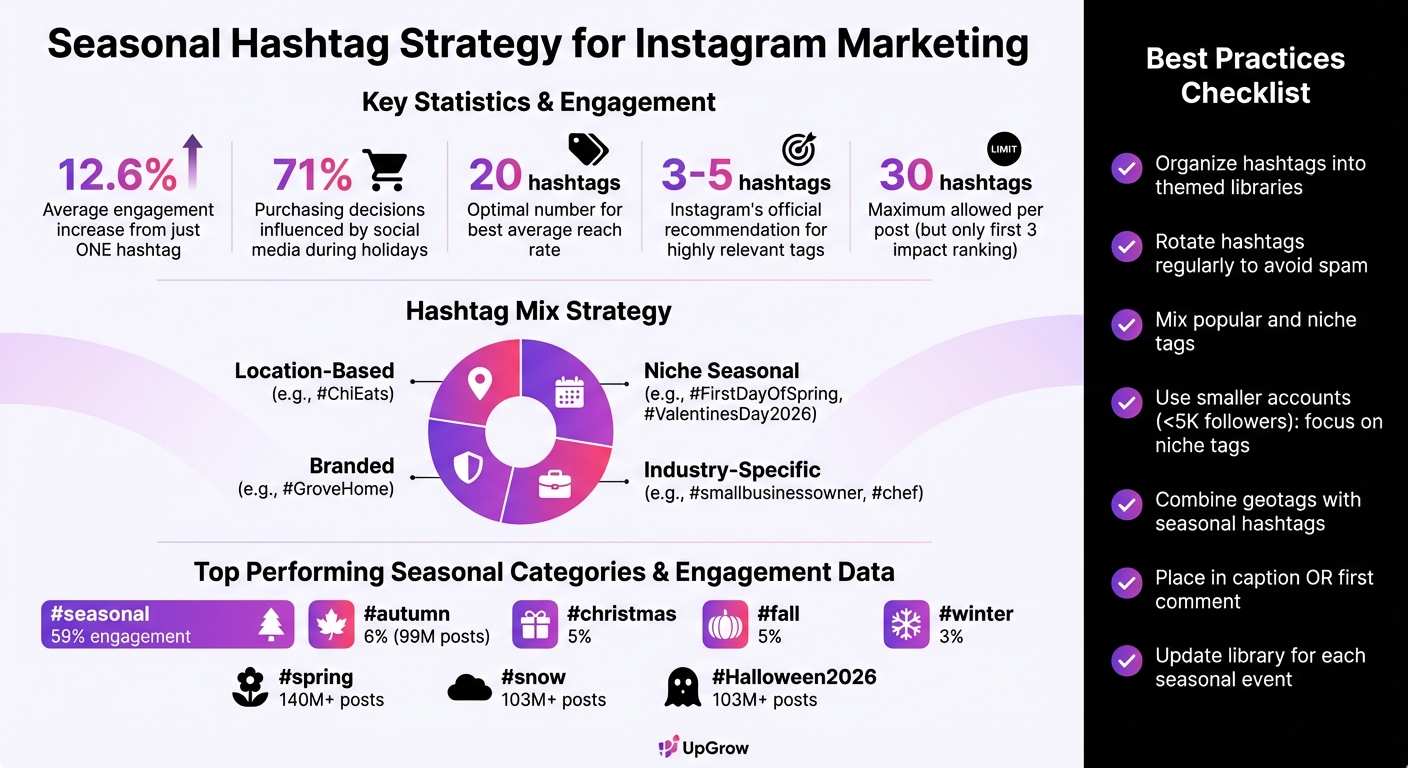
Seasonal Hashtag Strategy: Key Statistics and Best Practices for Instagram Growth
Finding the right seasonal hashtags doesn't have to be a hassle. With AI-driven tools and social holiday calendars, you can get curated hashtag collections tailored to your content and audience. The trick is knowing where to find them and how to use them effectively to make the most of seasonal opportunities.
Social holiday calendars are a great starting point. These calendars list hashtags tied to daily, monthly, and seasonal observances, making it easy to plan your content around key dates. By referencing these calendars, you can map out your content strategy weeks - or even months - in advance, ensuring you're ready to capitalize on high-engagement moments.
AI tools like UpGrow's AI Hashtag Generator can also be a game-changer. Simply input your post description, and the tool suggests seasonal hashtags tailored to your content. UpGrow even offers a Viral Instagram Content Library, packed with trending templates and niche-specific ideas to help you stay ahead of seasonal trends. These free tools, available without login, have been trusted by thousands since 2016 and are designed to align your content with current trends.
For more localized relevance, use tools that focus on trending hashtags in your region. This ensures your content resonates with local audiences during specific events. Additionally, Instagram's native search feature is a handy way to gauge the popularity of a hashtag. It shows the number of posts associated with each tag, helping you avoid overly competitive ones where your content might get lost.
Once you've gathered the right tools, it's time to put them to work. When it comes to seasonal hashtags, remember: quality beats quantity. A study of over 18 million Instagram posts revealed that using around 20 hashtags delivers the best average reach rate.
To strike the perfect balance, mix niche seasonal hashtags (like #FirstDayOfSpring or #ValentinesDay2026) with industry-specific ones (such as #smallbusinessowner or #chef). This approach ensures your content is both timely and relevant. For smaller accounts with under 5,000 followers, focus on hashtags that are popular but not oversaturated. This helps your posts reach your Instagram target audience without getting buried in a sea of competition.
Organize your hashtags into themed libraries based on your content pillars. For example, create pre-made lists for scenarios like "Holiday sales", "Spring lifestyle content", or "Summer product launches." This saves time and keeps your posts contextually relevant. Rotate your hashtag lists regularly to engage different audience segments and avoid coming across as spammy. You can place hashtags either at the end of your caption or in the first comment. Both methods work, but putting them in the first comment keeps your caption looking cleaner.
Seasonal hashtag libraries aren’t just about increasing visibility - they’re a strategic tool to amplify engagement and attract followers who genuinely care about your content. Let’s break down how these benefits come to life:
Just adding a single hashtag can give your engagement a noticeable lift - up to 12.6% on average. Seasonal hashtags like #ValentinesDay2026 or #FirstDayOfSpring make your posts more discoverable to users actively searching for timely and relevant content. This simple addition can place your content right in front of the right audience at the right time.
Seasonal hashtags are like magnets for users looking for timely updates or inspiration. Instagram’s algorithm uses hashtags to identify the context of your posts, ensuring they’re shown to the people most likely to interact with them. This targeted visibility becomes especially powerful during holidays, when social media influences about 71% of purchasing decisions. On top of that, these hashtags make it easier to track user-generated content, helping you connect with your audience on a more personal level. The result? More meaningful interactions that naturally lead to organic growth.
Seasonal hashtags, especially those that are specific or location-based, help you attract followers who are genuinely interested in your content. They also signal Instagram’s algorithm to better understand your posts, ensuring they’re delivered to the right audience. This precision fosters authentic engagement, which builds trust and strengthens your community over time. The trick is to choose hashtags that are popular enough to expand your reach but not so oversaturated that your content gets buried.
For brands looking to fine-tune their strategy, tools like UpGrow’s AI-powered solutions can help optimize seasonal hashtag use. By incorporating these libraries into your Instagram plan, you can boost your visibility, engage meaningfully with your audience, and set the stage for sustained growth.
To make the most of seasonal hashtags, it's important to use them wisely. Here are some practical tips to help you get the best results.
Where you put your hashtags can make a difference. Adding hashtags directly in your post captions ensures they're indexed immediately for content categorization. Some brands prefer placing hashtags in the first comment to keep captions looking clean, and studies show that this doesn’t significantly affect reach.
For Instagram Stories, hashtags can boost discoverability by making your content more likely to show up in search results. You can add hashtags using the text tool and then shrink or hide them behind stickers or GIFs to keep your Story visually appealing. A great example of this is when Sweaty Betty used #globalrunningday alongside their branded hashtag #iamasweatybetty in June 2024. This approach connected them with a broad audience and their niche community, earning them over 2,700 likes.
Including a branded hashtag in your Instagram bio is another smart move. It acts as a call-to-action, encouraging followers to engage. For instance, Grove Collaborative uses #GroveHome in their profile. While Instagram allows up to 30 hashtags per post, only the first three generally impact ranking. Instagram’s official Creators account suggests sticking to 3–5 highly relevant hashtags per post for the best results.
Seasonal events require fresh and relevant hashtags. Regularly updating your hashtag library ensures your content stays timely. Avoid overusing the same hashtags - organize them into themed groups for specific occasions like product launches or behind-the-scenes content.
Striking a balance between popular and niche hashtags is essential. For smaller accounts (under 5,000 followers), niche hashtags often perform better than broad ones with millions of posts. Take #glassskin, for example - it grew to over one million posts within the beauty niche, offering a more focused audience. AI-powered tools can simplify this process, suggesting hashtags tailored to your content and audience. Additionally, tools that monitor country-specific trends can help you connect with local audiences during regional seasonal events.
Pairing location-based hashtags with seasonal ones can help you reach a highly targeted audience. For example, using a local tag like #ChiEats alongside a seasonal one like #FallFlavors connects you with people in your area who are searching for timely and relevant content.
AI tools such as UpGrow take this strategy up a notch. These tools use advanced filters to target locations, interests, and hashtags, helping you attract followers who are genuinely interested in your posts. With high user satisfaction, UpGrow’s system allows you to focus on creating engaging content while it handles the targeting. Combining geotags, seasonal hashtags, and AI-driven strategies creates a strong foundation for ongoing growth.
Building on earlier strategies, understanding and using seasonal hashtag categories can significantly enhance your Instagram growth strategies. Timing and relevance are crucial here, as these hashtags let you tap into seasonal moments and trends. Below, we’ll explore some of the most effective seasonal hashtag categories, complete with examples you can start using right away.
Major holidays are a goldmine for Instagram engagement. For Christmas, hashtags like #Christmas2026, #MerryChristmas, #ChristmasJoy, #SantaIsComing, and #ChristmasMorning are highly effective. Thanksgiving campaigns can benefit from using tags such as #Thanksgiving2026, #Gratitude, #FamilyFeast, #TurkeyDay, and #ThanksgivingTable. Similarly, for the Fourth of July, hashtags like #IndependenceDay, #FourthOfJuly, #AmericanPride, #July4th, and #AmericanSpirit help you connect with patriotic audiences.
Halloween deserves special attention, with hashtags like #Halloween2026 and #SpookySeason generating over 103 million posts. Adding more specific tags like #HalloweenCostumeIdeas can help you reach users actively searching for inspiration. For New Year’s, hashtags like #NewYear2026, #HappyNewYear, #NYE2026, and #CheersToTheNewYear capture the celebratory spirit.
Timing is everything. For holidays like Easter (April 5, 2026) or Christmas, campaigns often kick off weeks in advance to build excitement and attract early shoppers. Similarly, events like Chinese New Year (February 17, 2026) and Mother’s Day (May 10, 2026) require early planning to make the most of these key shopping periods. Beyond holidays, seasonal lifestyle hashtags provide opportunities to connect with audiences all year long.
These hashtags go beyond specific dates, capturing the essence of a season and staying relevant throughout the year. For winter, popular hashtags include #WinterWonderland, #snow (which boasts over 103 million posts), and #CozySeason. Spring content thrives with #spring, which has more than 140 million posts, along with niche tags like #seasonalflowers and #SpringBloom for a more targeted reach.
Summer posts shine with hashtags like #SummerVibes, #beachvibes, and #summerstyle, while autumn content benefits from #autumn (nearing 99 million posts) and #AutumnAesthetic, which appeals to those seeking visually pleasing content. Broad seasonal hashtags like #seasonal capture 59% of engagement, with others like #autumn (6%), #christmas (5%), #fall (5%), and #winter (3%) contributing to the mix.
Pairing broader hashtags with niche ones like #seasonalliving, #foraging, or #seasonalproduce helps you reach engaged communities. For audiences focused on sustainability, tags like #eatlocal and #supportlocal resonate well, especially during harvest seasons. Combining these seasonal lifestyle hashtags with targeted promotions can amplify your campaigns.
Promotional hashtags are designed to drive action during specific marketing periods. For Black Friday and Cyber Monday, hashtags like #BlackFriday2026, #CyberMonday2026, #HolidayDeals, and #OnlineDeals are essential for capturing shoppers’ attention during peak buying times.
For awareness campaigns, hashtags like #Pride2026, #EarthDay2026, #MentalHealthAwareness, and #IWD2026 (International Women’s Day) connect your brand with values-driven audiences. During the back-to-school season, hashtags like #BackToSchool paired with product-specific tags can boost engagement. Similarly, #SmallBusinessSupport and #ShopSmall work well during Small Business Saturday and throughout the holiday shopping season.
Branded hashtags combined with campaign-specific ones not only boost engagement but also make it easier to track and repurpose user-generated content. Posts that include at least one hashtag see a 12.6% increase in engagement on average, so choosing the right hashtags is key to making your promotional efforts count.
Seasonal hashtag libraries not only simplify your content strategy but also help expand your audience reach. Did you know that a single hashtag can increase engagement by 12.6%? That’s a powerful tool you don’t want to overlook.
To get started, organize your hashtags into specific categories. For example, you might have event-focused tags like #Halloween2024, niche-specific tags such as #chef, or community-driven ones like #photographersofinstagram. Keeping your hashtags sorted into these libraries allows you to rotate them easily and keeps your content feeling fresh. You can even create separate lists based on content themes, which makes it simpler to switch things up when needed. This kind of structure is key for using AI tools effectively.
Speaking of AI, tools like UpGrow take the guesswork out of hashtag management. Instead of spending hours researching, these platforms use AI to generate seasonal hashtags tailored to your content’s category, tone, and audience. UpGrow even filters hashtags by location, age, gender, and interests, ensuring you attract followers who are genuinely interested in your content.
But it doesn’t stop there. UpGrow also provides real-time analytics to fine-tune your strategy. Their free trial and Growth-Guarantee - offering a refund if your follower count doesn’t grow - make it easy to get started. Combine these seasonal hashtags with geotags for local reach, experiment with different hashtag sets using A/B testing, and let AI handle the heavy lifting. That way, you can focus on what truly matters: creating content that connects with your audience.
Seasonal hashtag libraries are a great way to boost engagement on Instagram. They offer a curated list of hashtags tied to specific seasons, holidays, or events, making it easier for your posts to connect with users searching for related content. This increased visibility can lead to more interactions, like comments, likes, and shares.
When you align your hashtags with trending topics and Instagram's emphasis on relevance, your content has a better chance of reaching a wider audience. Using these hashtags thoughtfully keeps your posts timely and in tune with current events, helping them stand out in a crowded feed.
Finding and organizing seasonal hashtags doesn’t have to be complicated - especially if you have the right tools. UpGrow offers features like the Trending Instagram Hashtags by Country Tool, which lets you uncover popular hashtags specific to different U.S. regions. If you’re looking for something more personalized, the AI Hashtag Generator can recommend hashtags tailored to your content’s description and category, helping your campaigns stay relevant and engaging.
After you’ve collected your hashtags, UpGrow’s tools make it simple to save, organize, and monitor their performance. This way, your seasonal hashtag lists are always ready when it’s time to plan posts. Combine these tools with a carefully planned content calendar, and you’ll be well-prepared to ride seasonal trends and boost engagement.
To maximize your reach and engagement on Instagram, it's smart to use a mix of broad and niche hashtags. Here's the sweet spot: include 1–2 broad hashtags (those with over 1 million posts, like #love or #instagood) and 2–3 niche hashtags (under 100,000 posts, tailored to your content or audience). Broad hashtags cast a wide net, while niche ones help you connect with smaller, more engaged communities.
For example, you could combine one broad hashtag with a couple of medium-sized ones (100,000–1 million posts) and finish with a few ultra-specific tags that align with your content’s theme, location, or target audience. Regularly rotate your hashtags to keep your strategy fresh and avoid overusing the same combinations. Also, steer clear of banned or spammy hashtags, as they can harm your visibility. This balanced approach helps the Instagram algorithm showcase your content to both larger audiences and niche groups, enhancing your overall reach.
If you're unsure about the right mix, tools like UpGrow’s AI Hashtag Generator can take the guesswork out of the process. It quickly suggests combinations of broad and niche tags tailored to your content, saving you time while improving your strategy.


