
AI UGC Distribution: Instagram vs. TikTok
Compare Instagram and TikTok for AI-driven UGC: Instagram for conversions and community, TikTok for viral reach and discovery with platform-specific AI tactics.
Compare Instagram and TikTok for AI-driven UGC: Instagram for conversions and community, TikTok for viral reach and discovery with platform-specific AI tactics.
4.98 /5 - from 58k reviews
Trusted by 50,000+ creators — get real engagement delivered to your profile in minutes, not days.
Want to maximize your social media strategy? Here's the bottom line: Instagram is best for building loyal communities and driving conversions, while TikTok excels at viral reach and quick brand exposure. Both platforms dominate user-generated content (UGC) distribution, but they cater to different goals.
| Feature | TikTok | |
|---|---|---|
| Primary Goal | Conversions, loyalty | Viral reach, awareness |
| Engagement Rate | 0.50% | 2.50% |
| ROAS | 8.83 | 1.4x |
| CPC | $0.40–$0.70 | $0.99 |
Best strategy? Use TikTok for discovery and Instagram for deeper engagement and conversions. Together, they create a balanced funnel for UGC success.
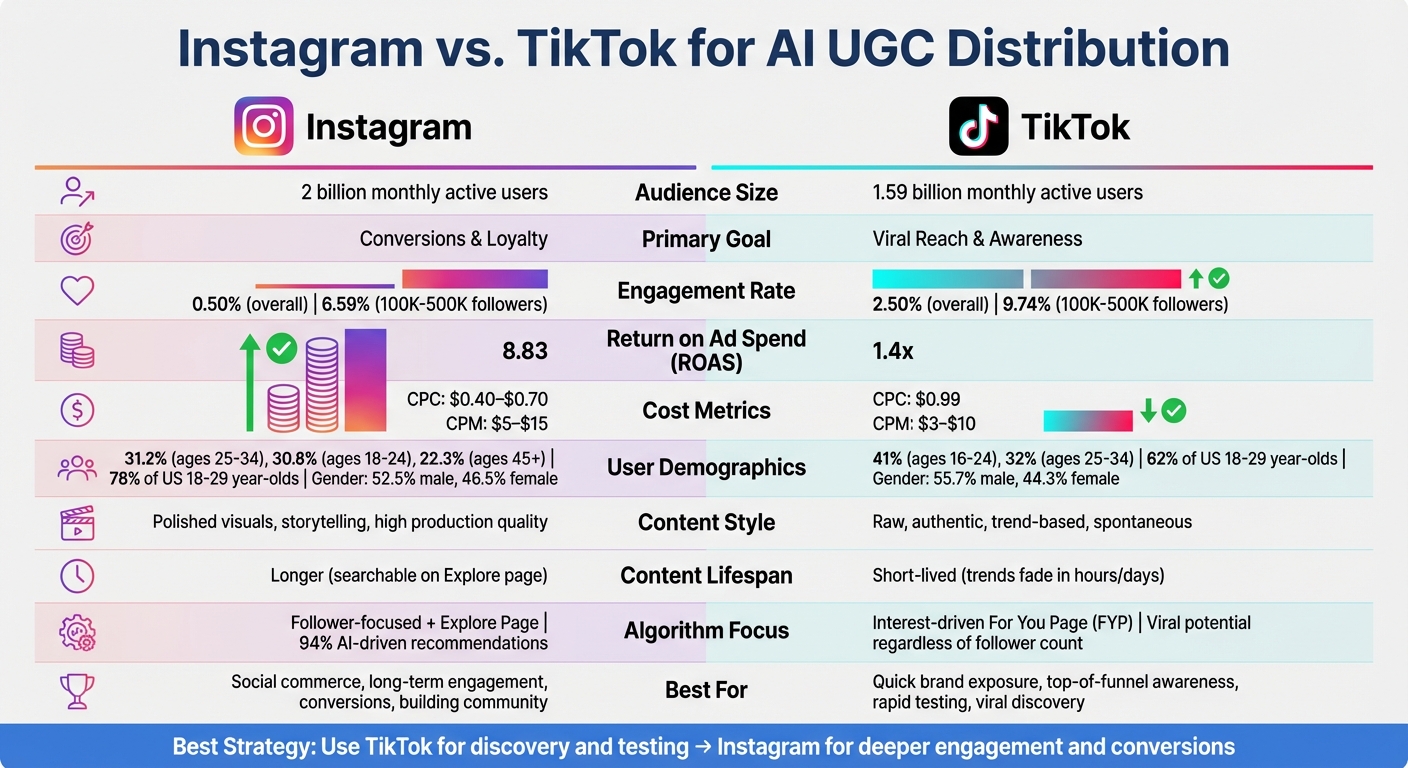
Instagram vs TikTok: Complete Platform Comparison for UGC Distribution
Knowing who uses each platform - and how they engage with it - can make or break your AI-powered UGC strategy. These demographic insights go beyond platform performance, helping you fine-tune your approach to sharing user-generated content. Each platform attracts distinct age groups, each with its own content preferences.
Instagram caters to a broad age range, with 31.2% of users aged 25–34, 30.8% aged 18–24, and 22.3% aged 45 and older. In the U.S., a striking 78% of 18–29-year-olds are on Instagram. This audience gravitates toward UGC that tells a cohesive story and has high production quality. The platform thrives on fostering deeper, long-term connections through features like Stories, polls, and direct messaging. Unlike platforms built for endless scrolling, Instagram users often browse with purpose, favoring brands that invest in polished visual storytelling and maintain a consistent aesthetic. The gender breakdown is fairly even, with 52.5% male and 46.5% female users. These characteristics highlight Instagram's need for visually compelling and well-curated content, which AI tools can refine to match the tastes of a discerning audience.
TikTok leans heavily toward a younger crowd, with 41% of users aged 16–24 and 32% aged 25–34. Among U.S. users, 62% of 18–29-year-olds are active on TikTok. This Gen Z-heavy audience values authenticity over polish, preferring raw, unfiltered content that feels like a recommendation from a friend rather than a polished brand pitch. Features like Duets, Stitches, and video replies fuel high engagement and rapid content creation. TikTok’s "For You Page" (FYP) uses an interest-driven algorithm, giving UGC the potential to go viral regardless of follower count. Interestingly, top TikTok creators with over 1 million followers are now producing slightly longer videos, with an average length of 39 seconds, and 40% of these videos include spoken content. This shift points to a growing preference for narrative-driven UGC. The gender split is slightly male-skewed, with 55.7% male and 44.3% female users. TikTok’s youthful, trend-sensitive audience sets the stage for dynamic AI-driven content strategies that tap into the platform’s fast-paced, ever-evolving nature.
Platform algorithms are the driving force behind the reach of AI-powered user-generated content (UGC). Each platform takes a unique approach to content distribution, and understanding these differences - like those between Instagram and TikTok - can help you fine-tune your strategy to maximize engagement and visibility. These algorithms play a key role in determining how content connects with the right audiences.
Instagram employs several AI systems tailored for different sections of the app, including Feed, Stories, Explore, and Reels.
"Instagram doesn't have a singular algorithm that oversees what people do and don't see on the app. We use a variety of algorithms, classifiers, and processes, each with its own purpose."
For the Explore page, Instagram's algorithm prioritizes discovery by analyzing how quickly posts accumulate likes, saves, and shares. It also considers your past activity and the similarity of new content to what you've engaged with before. New posts are initially shown to a small "look-alike" audience - if this group responds positively, the content is then distributed to larger clusters of similar users. Posts that perform well within the first hour can see their reach triple.
When it comes to Reels, the focus shifts to entertainment value. The algorithm evaluates metrics like watch time, completion rates, replays, and whether users visit the audio page.
"The most important predictions we make [for Reels] are how likely you are to reshare a reel, watch a reel all the way through, like it, and go to the audio page."
Direct message (DM) shares are another key signal for discovering new audiences. Approximately 694,000 Reels are shared via DM every minute, making "sends per reach" a powerful indicator of content success. Watch time and likes per reach are also critical, with viewers deciding to keep watching within just 1.7 seconds. Additionally, since around 60% of Reels are watched without sound, using on-screen text has become essential for maintaining viewer attention.
Instagram has also updated its algorithms to deprioritize low-quality AI content, spam, and watermarked reposts - especially recycled TikToks. Instead, it boosts original content from smaller creators over aggregator accounts. Impressively, 94% of Instagram's content distribution is now driven by AI recommendations.
TikTok takes a different approach, relying on a single primary recommendation engine that powers the For You Page (FYP). This algorithm prioritizes content relevance over creator popularity, giving even new accounts a chance to reach a large audience if their content aligns with user interests.
The algorithm evaluates a wide range of signals, including likes, comments, follows, video details, and device settings. However, watch time and completion rates are the most critical factors for determining whether a video has viral potential.
"What makes TikTok different... is that they have fantastic volumes of data, highly engaged users, and a setting where users are amenable to consuming algorithmically recommended content."
TikTok's FYP blends content from both new and followed creators, ensuring that AI-enhanced UGC is given fair exposure. This approach makes TikTok a fertile ground for content strategies that rely on AI-driven creation and distribution. By focusing on relevance and engagement, the platform enables creators to connect with audiences in a way that feels organic and impactful.
AI is revolutionizing how brands create content, offering tools that can generate 10–20 script variations from just one idea. Platforms like CopyCut simplify the process by automating shotlist creation, which helps creative teams keep up with the fast pace of social media without burning out. This ensures brands can consistently produce content without overwhelming their teams.
AI also adapts content tones to fit specific platforms. For example, Buffer's AI Assistant fine-tunes tone and style based on the platform - polished visuals for Instagram or a raw, unfiltered vibe for TikTok. On Instagram, AI tools generate eye-catching visuals tailored to the platform, while script templates and brief generators can cut down script creation time by as much as 60–80%.
Brands leveraging AI systems can churn out 50–100 content assets each month, achieving a 10–20% keeper rate. This approach has been particularly effective with TikTok Spark Ads, where brands have seen a 20–50% reduction in CPA. AI also optimizes TikTok hooks, aiming for a 3-second view rate of over 60% and an average watch time ranging between 15–20 seconds. By aligning content creation with platform algorithms, brands can maximize audience engagement, setting the stage for advanced distribution strategies.
Once the content is fine-tuned, AI takes distribution to the next level. Advanced tools analyze engagement data to predict how a post will perform before it even goes live. This allows creators to tweak hooks and calls-to-action for better reach. Tools like ContentStudio monitor trending topics and influencer activities by country or niche, providing actionable insights into which UGC topics to focus on next.
FeedHive automates follow-up actions based on a post's initial performance. For instance, it can post a link in the comments section if a post hits a certain level of virality. On Instagram, services like UpGrow combine AI-driven targeting with human expertise to refine audience reach. These tools use filters like location, age, gender, and language to maximize profile growth and engagement.
AI also simplifies cross-platform content repurposing. High-performing Instagram posts can be reimagined into TikTok-friendly formats - or vice versa - prolonging the content’s relevance without requiring extra creative effort. Tools like Hootsuite bring all direct messages into one unified inbox, using AI to analyze sentiment and prioritize urgent customer inquiries. This seamless integration of creation and distribution ensures brands can amplify their reach while maintaining a strong connection with their audience.
Instagram’s algorithm prioritizes content that captures attention within the first hour of posting. The ideal posting window falls between 7 a.m. and 4 p.m., when your audience is most likely to engage. Posts that perform well during this period can achieve nearly 3x more reach.
When it comes to engagement metrics, saves and shares carry more weight than likes. To maximize distribution, focus on creating carousels, checklists, or tutorials that offer long-term value. Adding on-screen text to Reels can also enhance their appeal.
One thing to avoid is reposting content with TikTok watermarks or in low resolution, as Instagram actively suppresses such posts. To maintain originality, use AI tools to re-edit videos by tweaking text overlays and adjusting aspect ratios. Tools like UpGrow combine AI-driven targeting with expert strategies to refine how your content reaches users. These tools utilize filters such as location, age, gender, language, and interests to connect with genuinely engaged followers. Beta users of UpGrow’s AI-assisted features have reported a 275% increase in monthly followers, and the platform is trusted by over 55,000 customers worldwide.
If your engagement has plateaued, a niche-specific strategy can help reset the algorithm. For 7–10 days, focus solely on interacting within your niche. Additionally, AI social listening tools can help you identify trending audio tracks within your niche, which is a smarter approach than chasing viral hits. This method allows you to stay relevant while standing out.
TikTok’s For You Page operates on interest graphs, rewarding authentic, relatable content. Handheld shots, raw edits, and creative hooks that grab attention within the first 3 seconds are key to success.
The platform thrives on high-volume content and frequent creative testing. Using AI tools, brands can generate 10–20 script variations from a single concept, helping to avoid creative fatigue and identify top-performing ideas faster. Incorporating strong user-generated content (UGC) into TikTok Spark Ads has proven to lower CPAs by 20–50% for brands scaling their organic hits. To keep the algorithm engaged, aim to post 1–2 times daily.
Engagement loops are another effective strategy. Replying to top comments with new videos encourages interaction, which TikTok’s algorithm favors. AI-powered UGC campaigns on the platform can deliver 4x higher click-through rates and 50% lower cost-per-click compared to traditional ads. However, only about 10–20% of UGC assets are typically worth keeping, with the top 2–5% becoming standout creatives. AI-generated content, capable of producing 50–100 assets per month, gives brands a significant edge in this fast-paced environment.
When comparing Instagram and TikTok, the two platforms have distinct strengths depending on your marketing goals. Instagram excels at driving conversions, boasting an impressive ROAS of 8.83 compared to TikTok's 1.4x. Its AI-powered shopping tools, like product tagging and shoppable galleries, make it a powerhouse for social commerce. Plus, Instagram content has staying power, remaining searchable on the Explore page for extended periods.
On the other hand, TikTok is all about rapid, viral reach. With a 9.74% engagement rate for accounts with 100K–500K followers (compared to Instagram Reels' 6.59%), TikTok offers a unique opportunity to gain visibility. Its "For You Page" algorithm can catapult content to millions, even for users with few followers, making it ideal for top-of-funnel strategies. TikTok's cost metrics also appeal to marketers, with an average CPC of $0.99 versus Instagram's $0.40–$0.70 and a lower CPM range of $3–$10 compared to Instagram's $5–$15. However, each platform comes with its own set of challenges.
Instagram's reach is more dependent on followers, which can make it harder for newer accounts to gain traction without a pre-existing audience. Additionally, Instagram users expect polished, high-quality visuals, so raw or less refined content - such as basic AI-generated posts - might not perform well. TikTok, while great for quick visibility, has a much shorter content lifespan. Trends on the platform can fade within hours or days, and AI-generated content often feels less genuine, scoring only 63% in perceived authenticity compared to 81% for traditional human-created user-generated content (UGC).
Ultimately, the choice between Instagram and TikTok comes down to your goals. If you're looking for long-term customer loyalty and conversions, Instagram's algorithms are a better fit. But if your focus is on creating buzz and reaching a broad audience quickly, TikTok's discovery features are hard to beat.
Here’s a side-by-side look at how these platforms stack up:
| Feature | TikTok | |
|---|---|---|
| Primary AI Discovery | Follower-focused + Explore Page | AI-driven "For You Page" (FYP) |
| Distribution Goal | Building community & driving high ROAS | Achieving viral reach & raising awareness quickly |
| Average ROAS | 8.83 | 1.4x |
| Engagement Rate (100K–500K followers) | 6.59% | 9.74% |
| Content Lifespan | Longer; searchable and reusable | Short-lived; trends fade fast |
| UGC Style | Polished, aesthetic, storytelling | Raw, spontaneous, trend-oriented |
| Average CPC | $0.40–$0.70 | $0.99 |
| Average CPM | $5–$15 | $3–$10 |
| Monthly Active Users | 2 billion | 1.59 billion |
| Global Discovery | AI auto-translation for Reels/Stories | In-app language selection |
Align your platform choice with your marketing objectives to make the most of these strengths.
Choose your platform based on your specific goals for AI-generated user content (UGC). If your priority is rapid brand awareness and reaching a wide audience with minimal investment, TikTok is the go-to. Its algorithm-driven "For You" page provides incredible visibility, making it perfect for top-of-funnel strategies where speed and volume are key. On the other hand, Instagram shines when it comes to driving conversions.
Instagram excels at turning engagement into revenue. With an average return on ad spend (ROAS) of 8.83 compared to TikTok's 1.4x, Instagram offers better tools for monetization. Its shopping features, longer content lifespan, and appeal across a broader age range (18–44) make it a powerful platform for brands focused on polished storytelling and social commerce.
The best approach? Use both platforms together. Start with TikTok to test messages and gain insights at a lower cost. Then, take those winning ideas to Instagram to deepen engagement and drive conversions. This strategy takes advantage of TikTok's discovery power while leveraging Instagram's ability to monetize and build long-term relationships. For brands focused on Instagram growth, tools like UpGrow combine AI-driven targeting with human expertise to grow authentic, engaged audiences - no bots involved.
Ultimately, your choice depends on where your audience spends their time and the actions you want them to take. Keep TikTok content raw and trend-driven, while maintaining a more polished and storytelling-focused approach on Instagram. The most successful brands aren't picking one platform - they're using both to create a seamless marketing funnel.
AI is reshaping how brands share user-generated content (UGC) on Instagram and TikTok, making the process smoother and more effective. On Instagram, AI tools help brands find genuine creators with high engagement by using filters like location, age, and language. These tools also adapt content into formats that work best for the platform, such as Reels or Stories. Plus, real-time analytics pinpoint which posts perform the best, helping brands boost their visibility on Explore pages and hashtag feeds.
On TikTok, AI takes UGC distribution to the next level by customizing content for the platform’s “For You” feed. AI tools can edit videos to include trending music, captions, and elements that resonate with TikTok users. Predictive analytics then analyze metrics like watch time and shares to identify top-performing videos, ensuring they reach a wider audience. By learning from what works, AI turns authentic UGC into a powerful tool for growth on both platforms.
TikTok’s user base skews younger, with about 41% of its global users falling between the ages of 16-24, and another 32% aged 25-34. The platform leans slightly male, with men in the 25-34 age group representing the largest demographic slice. This makes TikTok particularly popular among Gen Z and early millennials, creating a space that thrives on trend-driven and youthful content.
Instagram, by contrast, attracts a broader age range. While it remains a favorite among millennials, it also draws a notable number of users aged 35 and older, giving brands the opportunity to connect with both younger and more mature audiences. Its gender distribution is more balanced, and its diverse content formats - photos, Stories, and Reels - cater to a wide array of interests. These distinctions position TikTok as the go-to platform for younger, trend-savvy users, while Instagram offers consistent engagement across multiple age groups.
Instagram’s algorithm is all about relationship-based relevance. It evaluates posts from accounts you follow, looking at things like your interactions - likes, comments, and saves - the type of content, and details about the creator’s profile. From there, it filters out any inappropriate posts, narrows the pool to the most relevant 500 options, and ranks them in order of importance before they show up in your feed.
TikTok’s algorithm takes a different approach, focusing on immediate engagement and authenticity. It prioritizes short-form videos by analyzing early indicators like how much of the video people watch, completion rates, and quick actions such as shares and comments. TikTok also leans on features like Stitch and Duet, which encourage collaboration and give new creators a shot at visibility through strong engagement.
Put simply, Instagram tailors your feed based on your connections and curated signals, while TikTok thrives on promoting attention-grabbing, engaging videos - even from creators you don’t follow.


