
How AI UGC Boosts Niche Audience Engagement
AI-generated UGC slashes costs and production time while boosting engagement and conversions for niche audiences through scalable personalization and real-time analytics.
AI-generated UGC slashes costs and production time while boosting engagement and conversions for niche audiences through scalable personalization and real-time analytics.
4.98 /5 - from 58k reviews
Trusted by 50,000+ creators — get real engagement delivered to your profile in minutes, not days.
AI-powered user-generated content (UGC) is reshaping how brands connect with niche audiences by cutting costs, speeding up production, and enabling hyper-personalized content. Traditional UGC campaigns often involve high expenses and long timelines, but AI tools and free Instagram tools now allow brands to create dozens of content variations in minutes. For example, Bloom Beauty saved $4,000 in creator fees and achieved a 45% higher click-through rate with AI-generated ads in early 2026.
Here’s why AI UGC matters for niche markets:
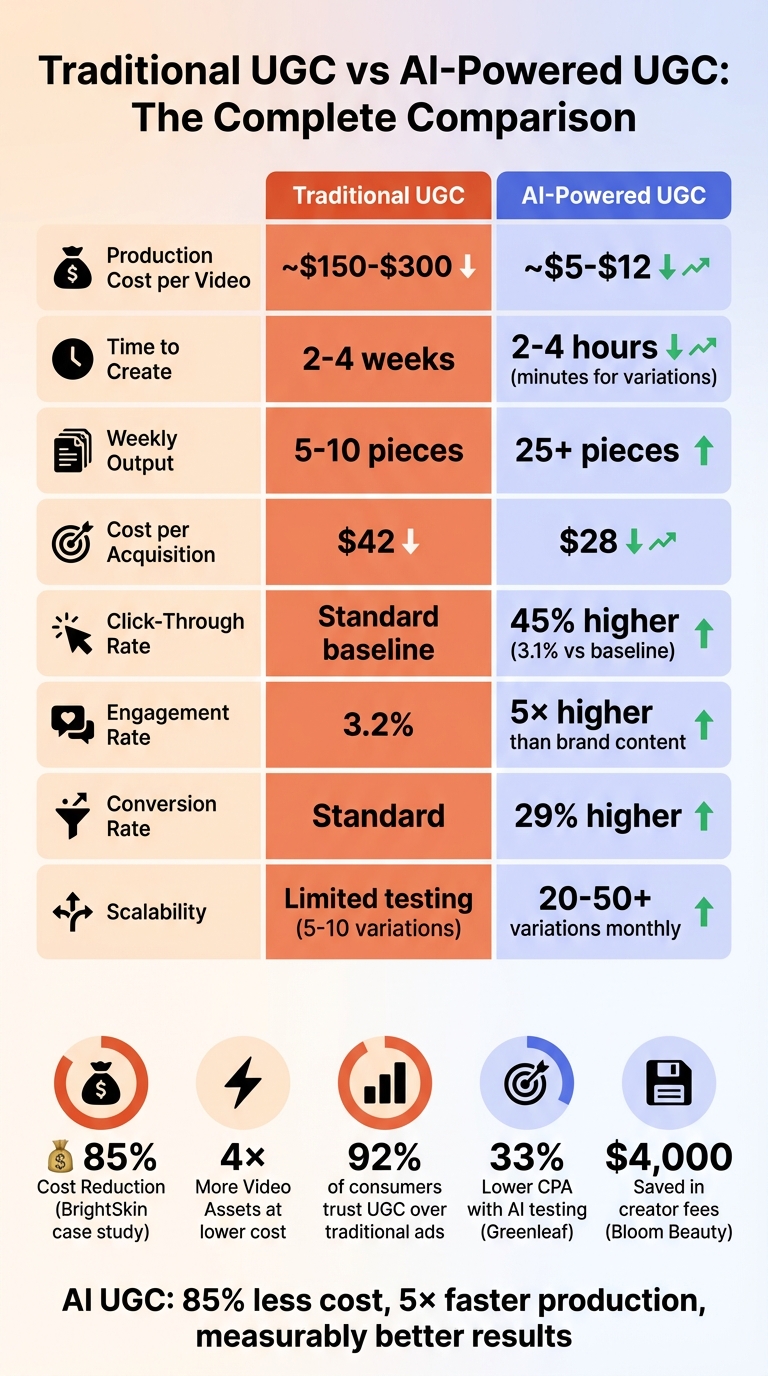
Traditional vs AI-Powered UGC: Cost, Time, and Performance Comparison
Creating traditional user-generated content (UGC) often involves juggling schedules, coordinating with creators, and waiting through lengthy production timelines. AI changes the game by making the process faster and more efficient. Instead of producing just 5–10 videos a week, AI tools can scale that up to over 25 videos weekly. How? By leveraging natural language processing (NLP) to analyze reviews and recreate authentic-sounding content. Platforms like HeyGen and Synthesia take it a step further, cloning voices from just 30 seconds of audio and translating content into more than 80 languages - with native accents and perfectly synced lip movements.
The real magic lies in hyper-personalization. AI platforms like Dynamic Yield and Algolia use real-time user behavior analysis to surface the most relevant content - whether it’s a testimonial, image, or video. For niche markets, this means avatars and content tailored to specific demographics, including age, location, and local preferences. A great example is BrightSkin Cosmetics. In 2025, they shifted from spending $8,000 a month on micro-influencers to AI-generated content. The result? Four times the video assets at 85% less cost, all while maintaining similar conversion rates. This kind of customization doesn’t just increase output - it creates content that feels genuine and relatable, which is key for building trust in niche markets.
Niche audiences are often skeptical of polished, corporate messaging. They’re looking for authenticity, and UGC delivers exactly that. In fact, 92% of consumers trust organic content more than traditional advertising. Think of UGC as the digital equivalent of a recommendation from a friend - it’s real, relatable, and not trying too hard to sell.
The numbers back this up. UGC drives 5× higher click-through rates and 28% more engagement compared to standard brand content. This trust factor becomes even more critical in tight-knit niche communities, where authenticity can make or break a campaign. Take Greenleaf Supplements, for instance. In 2025, they used an AI-powered "testing machine" to create 50 video variations every month. By experimenting with different avatars, hooks, and video lengths, they found the winning combinations that cut their cost per acquisition by 33%.
The impact of UGC isn’t just anecdotal - it’s measurable. Seventy-nine percent of consumers say UGC strongly influences their buying decisions. Campaigns driven by UGC typically achieve 29% higher conversion rates compared to traditional advertising. And when AI powers UGC, the cost and time savings are staggering. For example, production costs drop from roughly $150 per video to just $12, and what used to take 2–4 weeks can now be completed in just 2–4 hours.
| Metric | Traditional UGC | AI-Powered UGC |
|---|---|---|
| Production Cost per Video | ~$150 | ~$12 |
| Time to Create | 2–4 weeks | 2–4 hours |
| Cost per Acquisition (CPA) | $42 | $28 |
| Engagement Rate | 3.2% | 2.8% |
| Weekly Output | 5–10 pieces | 25+ pieces |
Source: Swfte AI Performance Benchmarks
For niche brands working with limited budgets, these numbers are game-changing. Instead of testing one message per quarter, they can test 50 variations in a single month. NovaTech Solutions demonstrated this in 2025 by using HeyGen’s video translation tool to localize a product launch into 15 languages in just one afternoon. The cost? Under $500. Compare that to the traditional $30,000 price tag and 6–8 week timeline for the same project. That’s the power of AI-driven UGC.
To create effective AI-powered user-generated content (UGC), you need a clear picture of your niche audience. This means understanding their preferences, behaviors, and motivations on a deeper level. AI-driven tools like Google Analytics 4 and HubSpot can help by uncovering detailed demographics, user activity patterns, and even what content resonates most with your audience. These insights go beyond basic data like age or location - they reveal what topics grab their attention, when they're most engaged, and the challenges they're looking to solve.
Social listening is another critical step. Using tools like BuzzSumo, you can track trending topics, hashtags, and discussions that are specific to your niche. This isn't just about monitoring mentions; it's about learning the language and values of your community. For example, if your target audience is into sustainable fashion, you might notice conversations around "circular fashion" or "textile waste" are more frequent than general terms like "eco-friendly."
Sentiment analysis adds an emotional layer to your research. Tools like Lexalytics or MonkeyLearn, powered by Natural Language Processing (NLP), can analyze how your audience feels about specific topics or brands. This helps you avoid missteps and ensures your messaging aligns with their values. By combining these three methods - demographic insights, social listening, and sentiment analysis - you can build a complete profile of your niche audience and create content that connects in a meaningful way.
Once you know your audience, the next step is figuring out where to reach them.
Finding the right platforms is all about understanding where your niche audience spends their time online. Dive into platform-specific data to learn when they're most active, whether they prefer mobile or desktop, and how they interact with content. For instance, professional photographers might frequent Reddit photography threads and YouTube, while vintage fashion collectors might gather on Instagram or Discord.
Tools like Upfluence can analyze past engagement metrics - likes, comments, and shares - to predict which platforms will deliver the best results for your niche. Before committing resources, run a sentiment check on these platforms. If conversations about your industry are overwhelmingly negative on a certain platform, it might not be the best place to launch your UGC campaign.
Why does this matter? Because UGC ads placed on the right platforms can deliver four times higher click-through rates. Additionally, nearly 50% of millennials trust user testimonials more than traditional ads. Choosing the right platform isn't just a nice-to-have - it's essential for building trust and connecting authentically.
With your platforms locked in, the focus shifts to tailoring your content for maximum impact.
Once you've chosen your platforms, it's time to align your content strategy with your goals. Different platforms excel at different things. For example, TikTok and Instagram Reels are perfect for building brand awareness and riding the wave of current trends. These formats thrive on short, high-energy videos (15-30 seconds), vertical 9:16 layouts, and sound-on content featuring trending audio. On the other hand, Meta platforms like Facebook and Instagram are better for driving conversions. Here, slightly longer videos (30-60 seconds) with captions are key, as over 80% of videos on these platforms are watched without sound.
Your content's tone and structure should also match your objectives. For driving sales, use a "Problem-Agitation-Solution" framework to address specific pain points. If you're aiming to spark curiosity, "Discovery Stories" can make your product feel like a lucky find. For trust-building, strategies like "Social Proof Stacks" or "Comparison Angles" can highlight why your offering stands out.
| Platform Strategy | TikTok/Reels | Meta (Facebook/Instagram) |
|---|---|---|
| Primary Goal | Awareness & Trend Integration | Direct Response & Conversions |
| Audio Approach | Sound-on essential; trending sounds | Sound-off predominant; captions essential |
| Avatar Style | Young, casual, high-energy | Professional, trustworthy, relatable |
| Video Length | 15-30 seconds (fast-paced) | 30-60 seconds (benefit-focused) |
One universal rule applies across all platforms: the first 3 seconds are everything. Test at least 10 different hooks for each script to figure out what grabs your audience's attention. To save time, use AI editing tools like Veed.io to break down longer videos into shorter clips tailored for each platform. The key to success? Test widely - try 20+ variations instead of perfecting just one. This approach increases your chances of finding what resonates with your niche audience and keeps your campaigns from falling flat.
AI is reshaping how user-generated content (UGC) is discovered, managed, and utilized, making the entire process faster and more efficient.
AI takes the guesswork out of finding UGC by scanning thousands of posts to identify content that aligns with your niche. Using tools like natural language processing (NLP) and visual recognition, these platforms can detect relevant hashtags, brand mentions, and product images. They even tag content to ensure it aligns with your brand's guidelines. What’s more, AI leverages relevance scoring to rank content based on quality, highlighting top-performing visuals while filtering out posts that don’t meet your standards.
Sentiment analysis is another key feature. It helps evaluate the emotional tone of a post, so you can focus on content that genuinely connects with your audience.
Once AI identifies UGC, it organizes it into easily searchable categories - like customer reviews, product demos, or lifestyle imagery - eliminating the need for manual tagging. For businesses targeting specific regions or interests, AI can sort posts by location, season, or activity type. Take IKEA Switzerland as an example: they used Flowbox's Dynamic Tag Flows to link customer photos with specific furniture items and room types. This strategy boosted their average order value by 30%.
AI also goes a step further by predicting content performance. By analyzing elements such as the strength of a video's opening, pacing, and visual appeal, it identifies UGC that’s likely to resonate with your audience. For instance, Andrew Martin’s use of AI-powered curation on an e-commerce platform resulted in a 49% increase in purchase probability. This kind of organization and foresight ensures your audience finds exactly what they need while maximizing your content’s impact.
After sourcing and organizing UGC, integrating AI tools into your existing systems is the next logical step. Platforms like Shopify or Magento can connect with UGC tools via API integrations, automating tasks like tagging and distributing new content. This means you can enhance your workflow without overhauling your entire system.
AI also simplifies rights management. Advanced workflows can reduce the time it takes to secure content rights from 48 hours to just 15 minutes. For brands focusing on Instagram, tools like UpGrow (https://upgrow.com) make it easier to identify and engage with users already creating content about your brand, helping you grow your audience organically.
"AI finds the signal; humans deliver the authenticity. Neither approach works as well alone as they do together." - Swfte AI
Once your workflow is set up, the next step is encouraging your niche audience to contribute user-generated content (UGC). You can achieve this by offering rewards, forming strategic partnerships, and making the submission process as easy as possible. The key is to make participation both enticing and straightforward.
Reward programs are a powerful way to motivate niche communities to create content. Instead of relying on one-off contests, consider setting up a tiered system where users earn points or badges for completing specific tasks like sharing product photos, leaving reviews, or creating video testimonials. These points can then be exchanged for discounts, exclusive products, or early access to launches. For example, Sephora’s "Beauty Insider" program encourages customers to post photos of themselves using Sephora products in exchange for rewards.
Adding elements of gamification - like leaderboards, themed challenges, or digital badges - can also keep users engaged. A great example is Doritos' #CrashtheSuperBowl campaign, which invited fans to create their own ads for a chance to win $1 million and have their work aired during the Super Bowl.
For brands active on Instagram, tools like UpGrow (https://upgrow.com) can help identify users who are already creating content about your brand. This makes it easier to loop them into formal reward programs and further incentivize their participation.
In addition to rewards, leveraging the influence of community leaders can amplify these efforts.
Micro-influencers - those with 1,000 to 100,000 followers - are a valuable asset for spreading your message within niche communities. Unlike larger influencers, these creators often have a more personal connection with their audience, making them especially effective in specialized areas like vegan recipes or urban gardening. For instance, Marriott Bonvoy partnered with niche creators to produce travel content, reaching 11 million people. Similarly, Valabasas turned influential customers into brand affiliates, generating a 14x return on investment through UGC.
Taking this collaboration further, brands can involve community leaders in co-creation projects. This could mean inviting them to product development workshops or working together on limited-edition content series. Another option is allowing micro-influencers to take over your social media accounts temporarily, sharing behind-the-scenes content that encourages their followers to engage and create.
"Micro-influencers - those with follower counts between 1,000 and 100,000 - offer unparalleled authenticity and trusted voices within their communities." - Zigpoll
While partnerships and rewards are essential, simplifying the submission process is just as critical for maintaining momentum.
The easier it is for users to submit content, the more likely they are to participate. GoPro, for example, built social sharing directly into its cameras and software, enabling users to capture, edit, and share their content seamlessly. Nike keeps its audience engaged by regularly reposting user content tied to hashtags like #AirMaxMondays, creating a recurring cycle of submissions.
Clear instructions are also key. For example, a post-purchase email with a simple prompt like, “Love it? Share a photo with #YourBrandName for a chance to be featured!” can encourage users to participate. Providing content templates or examples can further guide users and make the process even smoother. Bumble’s 2025 TikTok campaign is another great example: by encouraging lifestyle creators to produce "come with me to my first date" videos, they lowered the cost per install and significantly boosted app downloads among Gen Z.
Encouraging casual, smartphone-shot content can also make a big difference. By explicitly asking for unpolished, natural content - like "shaky iPhone" videos - you tap into the authenticity that niche communities value. This approach resonates with audiences, as 92% of consumers trust recommendations from real people over branded content.
Once your niche community starts producing content, the next step is figuring out what works. Tracking key metrics is essential to identify which user-generated content (UGC) drives meaningful results versus content that only boosts surface-level numbers. By pairing these metrics with AI-powered tools like UpGrow's real-time dashboard, you can keep your UGC strategy sharp and effective.
Not all metrics are created equal. Instead of focusing solely on likes, prioritize metrics like saves and shares, which indicate genuine interest. A save often means someone plans to revisit or share the content, signaling deeper engagement that could lead to conversions.
Key metrics to monitor include:
Another standout metric is the UGC Engagement-to-Conversion Ratio (UGC ECR), which focuses on meaningful interactions. For instance, a 2025 case study highlighted a client testimonial video that boosted opt-ins by 27% when integrated into a PR campaign.
"The most valuable content isn't always the one with the highest engagement - it's the one that drives real action."
– Ahmed Yousuf, Financial Author & SEO Expert Manager, CoinTime
Beyond these metrics, AI-driven sentiment analysis can provide insight into emotional responses in comments and ensure content authenticity. Additionally, tracking branded search volume helps assess whether your UGC campaigns are building long-term credibility.
Real-time analytics enable quick adjustments, ensuring campaigns stay relevant and effective.
AI analytics tools allow for immediate campaign adjustments, eliminating the need to wait weeks for results. Platforms like Upfluence analyze past engagement data to predict which UGC will perform best. Tools such as Lexalytics and MonkeyLearn use Natural Language Processing to analyze sentiment and tone in real time, helping to keep campaigns aligned with your brand's values and audience expectations.
Advanced AI tools can even break down performance at a granular level, analyzing specific hooks, calls-to-action, or scenes within a video. For example, if high stop rates occur in the first three seconds but viewers drop off at 15 seconds, you know exactly where to fine-tune your content.
Recommendation engines like Algolia and Dynamic Yield suggest the most relevant UGC based on real-time user behavior. For Instagram users, UpGrow offers a live dashboard that tracks follower growth and identifies which UGC is making the biggest impact.
To maintain engagement, set up fatigue alerts to detect when a piece of UGC starts losing its effectiveness. Once performance peaks, rotate in fresh content to sustain momentum without starting from scratch.
The real-time insights gathered feed directly into strategies for refining future campaigns.
The real advantage of AI analytics lies in transforming insights into actionable strategies. Start by implementing AI-assisted tagging to organize content by visual elements, audio, and keywords. This creates a searchable database, making it easier to identify and reuse effective components.
A remix strategy can breathe new life into existing content. For instance, if a specific hook or call-to-action performs well, incorporate it into underperforming videos to refresh them without additional production costs. In 2025, BrightSkin Cosmetics used this approach, creating four times more video assets while cutting costs by 85%, simply by integrating customer review language into AI-generated scripts.
Testing is another critical step. Build a variant matrix - for example, combining four hooks, three benefit sequences, and two CTAs to create 24 unique ad sets. Greenleaf Supplements used this method in 2025, generating 50 AI video variations monthly and reducing their CPA by 33% after testing different avatars and hooks over just 48 hours.
Customer reviews can also provide valuable insights. Analyze reviews to identify authentic language that resonates with your audience, then incorporate these phrases into new scripts. Use granular UTM parameters on each UGC piece to track its specific impact on the customer journey.
Finally, leverage predictive performance modeling to analyze past trends and forecast which content strategies are likely to succeed. This allows you to allocate your budget more effectively, focusing on high-performing content while cutting underperformers to maximize ROI.
AI-driven UGC is transforming how brands compete in niche markets. By combining AI automation with genuine user-generated content, you can test upwards of 20 variations instead of just 5, quickly identifying what resonates most with your audience. The cost savings are staggering - AI can cut the cost per creative from around $300 to under $5. In fact, these strategies have been shown to lower customer acquisition costs by 20–30%.
Think of AI UGC as a full production workflow: let AI handle 70% of high-volume testing, while reserving the remaining 30% for human-crafted hero assets. Aim to refresh your creative library weekly with 5–10 new pieces. This approach ensures a steady stream of fresh content that drives measurable results.
"AI UGC isn't just about saving money; it's about survival through volume." - Koro
As highlighted earlier, AI-powered UGC on Instagram simplifies production while zeroing in on what truly engages your audience. For example, testing at least 10 hooks per script helps identify what captures attention. With real-time analytics, you can quickly spot top-performing content and generate multiple variations using AI. Bloom Beauty demonstrated this by achieving a 3.1% CTR - 45% higher than traditional ads - while saving roughly $4,000 in creator fees.
To make AI-generated user-generated content (UGC) feel more genuine, aim for relatability and embrace imperfections. Leverage AI tools that replicate natural elements, such as authentic reactions, casual lighting, and familiar, everyday environments. Steer clear of images or videos that look overly polished - small flaws can make content feel more real. Being upfront about using AI and working alongside real influencers can also add an extra layer of trust, making the content more believable and appealing.
When it comes to AI-generated user-generated content (AI UGC), the most telling metrics focus on engagement, reach, and ROI. These include indicators like website traffic, conversion rates, social shares, and user retention. For video campaigns, specific metrics such as the creative refresh rate, hook rate, and cost per creative are also crucial. Together, these measurements reveal how effectively AI UGC connects with audiences and delivers impactful results.
To grow User-Generated Content (UGC) on Instagram with UpGrow, leverage its AI-driven tools to boost engagement and simplify content production. With features like AI content recommendations, real-time suggestions, and smart targeting, you can spot trending topics, fine-tune posting schedules, and reach niche audiences using filters like location, age, and language. Plus, live analytics provide insights into performance, helping you adjust strategies for more impactful and scalable UGC campaigns.


