
Social media sentiment analysis: Ultimate Guide for 2025
Explore how AI-driven sentiment analysis can enhance your Instagram strategy, boost engagement, and connect with audiences effectively in 2025.
Explore how AI-driven sentiment analysis can enhance your Instagram strategy, boost engagement, and connect with audiences effectively in 2025.
4.98 /5 - from 58k reviews
Trusted by 50,000+ creators — get real engagement delivered to your profile in minutes, not days.

Want to grow your brand on Instagram in 2025? Start with social media sentiment analysis.
This guide covers how AI tools transform raw Instagram data into actionable insights, helping you track audience sentiment, refine content strategies, and boost engagement.
Get started by using sentiment analysis to fine-tune your Instagram strategy and connect with your audience effectively.
By 2025, AI-powered sentiment analysis tools have become go-to resources for marketers. These tools are tailored to meet Instagram's unique demands, helping brands execute the strategies outlined earlier.
Today's sentiment analysis tools offer:
| Tool | Key Features | Best For |
|---|---|---|
| Thematic | AI-driven insights, continuous updates, custom categories | Large-scale analysis |
| Sprout Social | Multi-platform tools, live monitoring, detailed reports | Mid-size businesses |
| NetBase Quid | Competitive insights, market trends, brand benchmarks | Market research |
| Hootsuite Insights | Social listening, trend tracking, campaign analysis | Social media teams |
For brands zeroing in on Instagram, platforms like UpGrow bring specialized benefits.
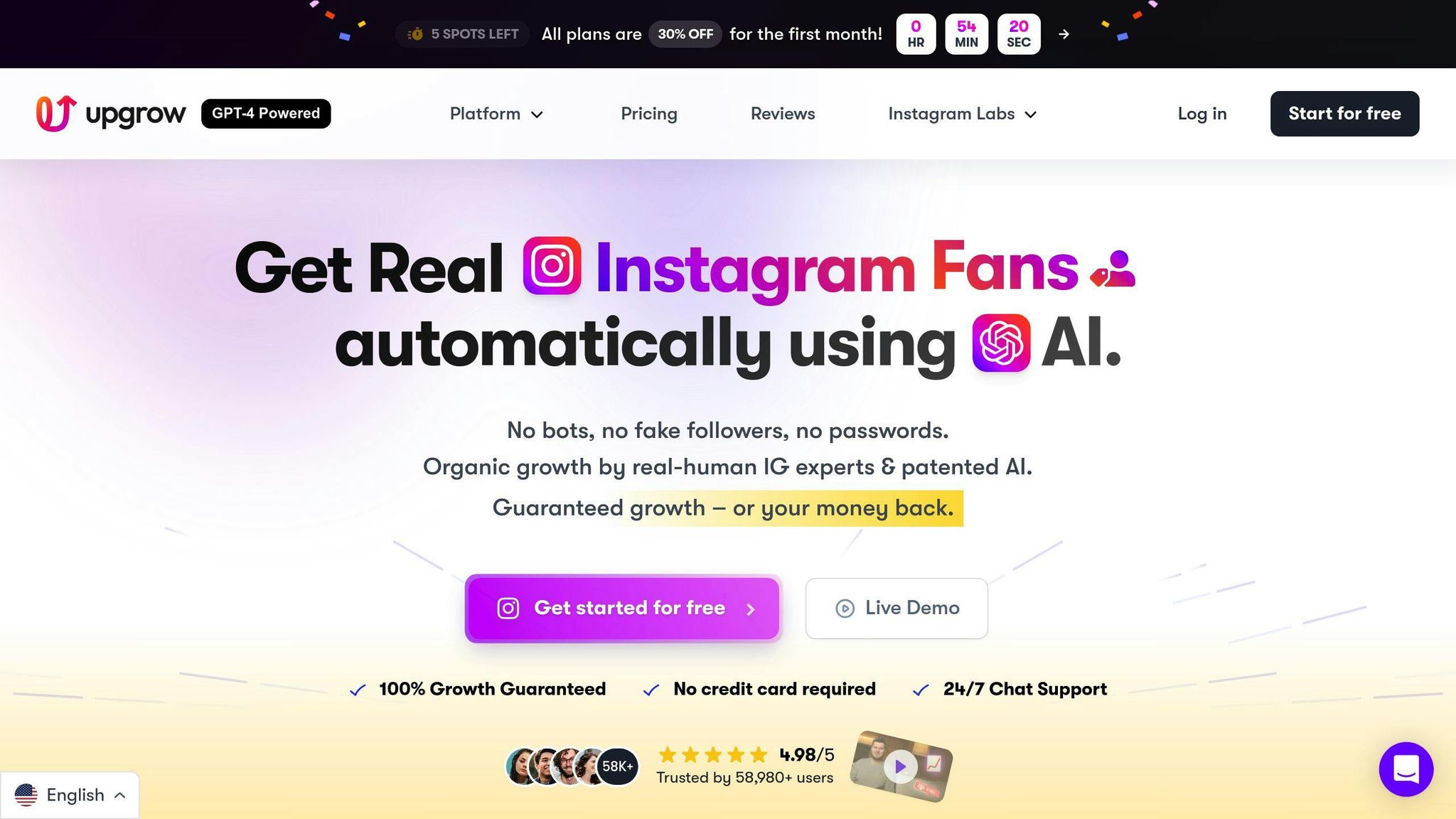
UpGrow takes Instagram growth to the next level by focusing on sentiment-driven strategies.
Smart AI Targeting
Real-time Analytics
UpGrow's proprietary Boost™ technology fine-tunes approaches in response to sentiment changes, keeping growth aligned with audience feedback.
Instagram’s visual-heavy nature means sentiment tracking here differs from platforms focused on text. Key areas to monitor include:
Sentiment analysis can guide your content strategy by highlighting audience preferences and needs. Here's how to translate sentiment signals into action:
| Sentiment Signal | Content Response | Growth Impact |
|---|---|---|
| Positive product reviews | Feature user-generated content | Builds social credibility |
| Questions from followers | Create educational content series | Boosts audience engagement |
| Trending topics | Post timely, themed content | Increases relevance |
| Customer frustrations | Share tutorials or FAQs addressing issues | Strengthens audience trust |
To effectively engage your audience, combine automated sentiment tracking with thoughtful human responses. Here’s a simple system for managing this:
For long-term growth, incorporate these insights into your content calendar, prioritizing the metrics discussed in Section 5.
Social media sentiment analysis has come a long way, thanks to advanced AI technologies. These tools now provide highly accurate insights into audience sentiment on platforms like Instagram.
Today’s NLP tools can pick up on subtleties like sarcasm, cultural references, and emotional undertones. This helps brands better understand complex audience feedback. For Instagram, NLP is particularly useful for analyzing captions, comments, and direct messages, uncovering emotional patterns and audience reactions in the process.
Instagram’s focus on visuals means analyzing multiple content types together is essential. Multimodal analysis combines data from various sources to give a deeper understanding of sentiment:
| Type | What It Analyzes and Why It Matters |
|---|---|
| Visual | Looks at facial expressions, color schemes, and brand presence to fine-tune content |
| Audio | Examines voice tones and music in Reels and videos to guide creative decisions |
| Text | Analyzes comments, captions, and hashtags to shape engagement strategies |
| Combined | Merges all data for well-rounded insights that improve content planning |
This method is especially effective for Instagram’s image and video-heavy format, helping brands create more engaging Stories, Reels, and posts.
Real-time monitoring allows brands to react quickly to changes in sentiment on Instagram, which is key for managing reputation and spotting trends.
"Real-time sentiment monitoring enables businesses to track millions of conversations across multiple platforms and respond promptly to customer feedback"
With tools like Brand24, brands can track mentions and measure online reputation, adjusting Instagram strategies based on immediate feedback. This instant awareness helps brands jump on viral trends or resolve issues before they escalate.
On Instagram, sentiment metrics give brands a clearer picture of how audience perception impacts follower growth, content performance, and overall campaign outcomes. Modern tools now link these sentiment insights directly to business results.
Here are the key metrics to track when connecting sentiment analysis to Instagram growth:
| Metric Category | Key Indicators | Impact on Growth |
|---|---|---|
| Sentiment Score | Ratio of positive to negative mentions and neutral feedback | Reflects overall brand perception |
| Engagement Metrics | Influence of sentiment on likes, comments, saves, and shares | Highlights content appeal |
| Growth Indicators | Follower increases and profile visits | Tracks audience expansion |
| Content Performance | Reach, impressions, and story completions | Measures content effectiveness |
Research from Socialbakers shows that brands see an average 12% boost in engagement rates for every 10% improvement in positive sentiment scores. This strong link helps businesses validate their investment in sentiment analysis tools.
Pairing sentiment analysis with Instagram's built-in analytics can create a more actionable strategy. Platforms like Sprout Social and Hootsuite Insights integrate this data to uncover trends and refine approaches.
Key areas to focus on when combining analytics:
Tools like Thematic allow businesses to build dashboards featuring sentiment trends, heat maps, and performance metrics tailored to their specific goals. These visualizations make it easier to spot trends, identify engagement peaks, and assess content impact.
Frequent monitoring is key to success. Setting clear benchmarks and regularly reviewing performance ensures businesses can fine-tune their Instagram strategies based on real sentiment data, not assumptions.
While tracking ROI is essential, it's just as important to maintain ethical standards when working with sentiment data.
As sentiment analysis tools continue to evolve in 2025, businesses face the challenge of balancing advanced technology with ethical responsibility. A recent study found that 71% of consumers value trust in companies that are transparent about how they use data.
When conducting sentiment analysis on Instagram, protecting user privacy and obtaining proper consent are non-negotiable. With regulations like GDPR and CCPA in place, companies must prioritize explicit user consent, anonymize data, and maintain transparency about how data is used. Techniques like differential privacy can help safeguard individual identities while still providing meaningful insights for sentiment tracking.
AI tools used for sentiment analysis can unintentionally reflect biases present in their training data, which can undermine accuracy. Research from MIT highlights how biased datasets can negatively affect AI performance. To address this, companies need to use diverse datasets, conduct regular audits, and continuously refine models. This is especially important for Instagram's global and culturally varied user base.
The ethical application of sentiment data should aim to enhance user experiences, not manipulate them. Clear guidelines help ensure that data is used responsibly without compromising competitiveness.
"The Cambridge Analytica scandal of 2018 fundamentally changed how businesses approach social media data analysis. It served as a wake-up call for implementing ethical data practices and maintaining user trust".
Key practices include being transparent with users, limiting data use to specific purposes, conducting regular audits, and implementing strong security measures. For Instagram, this approach helps brands foster trust while refining content strategies based on genuine feedback.
To uphold these principles, companies should establish data ethics committees to oversee sentiment analysis efforts. By following ethical guidelines, businesses can responsibly leverage sentiment analysis to build trust and grow sustainably on Instagram.
By 2025, sentiment analysis has become a game-changer for Instagram growth and brand management. Research highlights that 70% of customer purchase decisions are influenced by emotions. Thanks to AI tools, brands can now interpret and respond to social feedback with a level of accuracy never seen before.
According to the Sprout Social Index, 35% of U.S. consumers turn to Instagram for customer service, and 70% use the platform to guide their purchase decisions. These numbers highlight why understanding audience sentiment is essential for successful Instagram marketing.
UpGrow’s platform offers a blend of real-time analytics and AI-driven targeting, enabling brands to fine-tune their content strategies based on audience sentiment.
Here’s where to focus:


