How to Automate Product Drops with Instagram’s Scheduled DMs (May 2025 Playbook)
Automate your Instagram product drops with scheduled DMs, ensuring timely updates and personalized engagement for better sales.
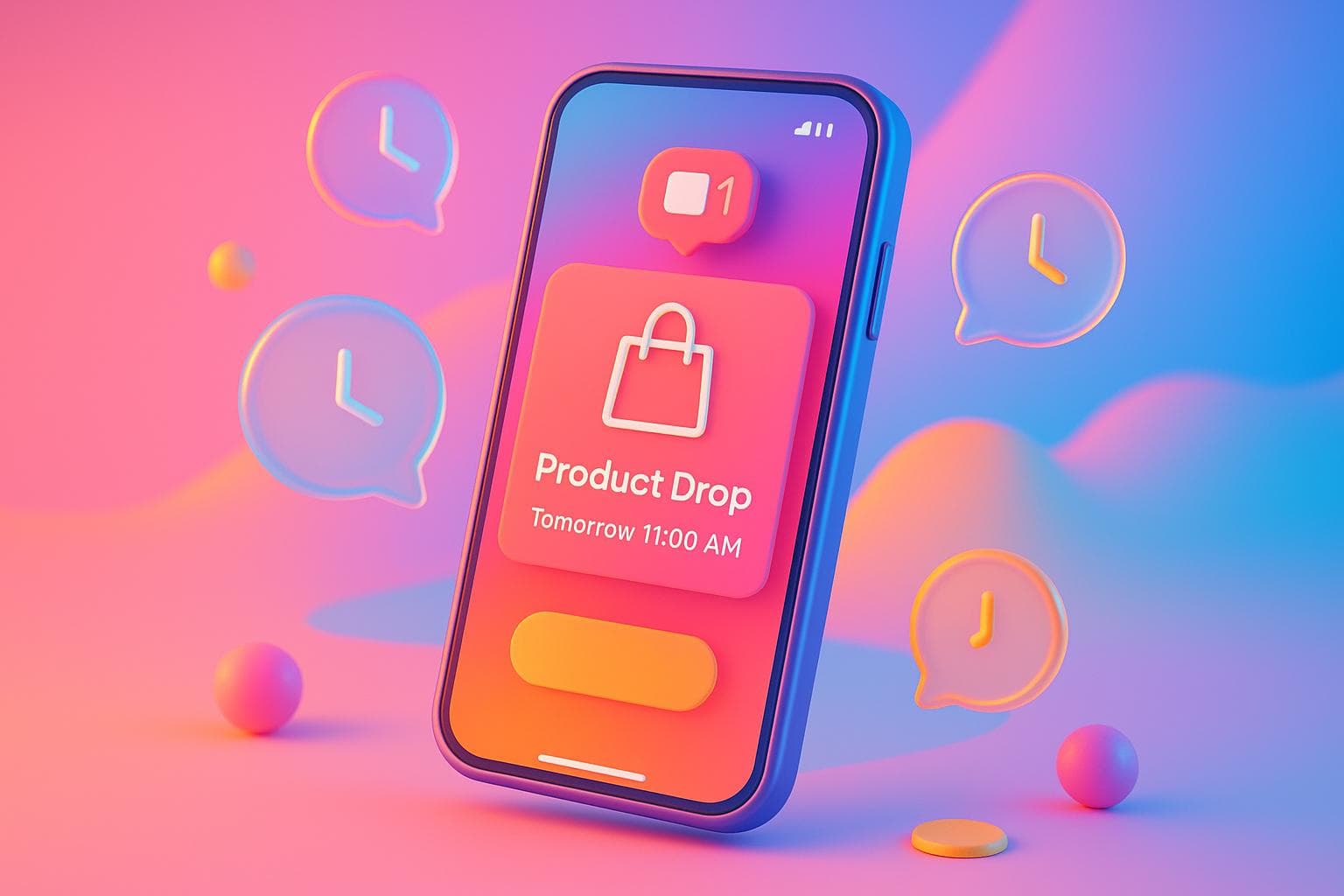
Want to make your Instagram product drops more efficient and impactful? Instagram’s Scheduled DMs let you automate messages for product launches, ensuring your audience gets timely updates without the manual hassle. Here’s what you need to know:
- What it is: Schedule DMs up to 29 days in advance to save time and ensure consistent communication during launches.
- Why it matters: DMs have a 90% open rate, outperforming traditional posts by offering personalized, direct engagement.
- Who benefits: E-commerce brands, local businesses, and influencers can use this tool to boost sales, manage global audiences, and reduce errors.
- How to get started: Use an Instagram Business or Creator account, craft personalized messages, and schedule them directly in the app.
How to Schedule Direct Messages on Instagram (New Feature)
Step-by-Step Guide to Setting Up Scheduled DMs for Product Drops
Get your Instagram account ready for automated product drops with a streamlined workflow. This guide covers everything from account setup to scheduling messages, helping you execute smooth campaigns on launch day.
Preparing Your Instagram Business Account
To schedule DMs for product drops, you’ll need an Instagram professional account - either a Business or Creator account. Without this, scheduling features won’t be accessible. If you’re using a personal account, switch to a professional one by heading to your profile settings, tapping "Account", and selecting "Switch to Professional Account." This unlocks features like scheduling, analytics, advertising, and shopping while ensuring your account aligns with Instagram’s guidelines.
If you’re planning to use Instagram Drops - a feature for time-sensitive shopping - you’ll also need to set up an Instagram Shop with Instagram Checkout. Keep in mind that Instagram Checkout is currently available only to eligible U.S.-based businesses. Make sure your account adheres to Instagram’s community guidelines and commerce policies by maintaining a complete business profile. This includes providing contact information, writing a clear bio, and staying active in an authentic and consistent way.
Scheduling DMs: A Step-by-Step Workflow
Once your professional account is ready, you can start scheduling DMs using Instagram’s built-in tools. This feature is available directly in the app’s messaging interface on both Android and iOS devices (desktop users will need to stick to mobile for this). Here’s how to schedule your DMs:
- Open the Instagram app on your mobile device.
- Go to your direct messages and open the chat with the person or group you want to contact.
- Write your message, ensuring you include all key details like product information, links, and any call-to-action text.
- Press and hold the send button to access the scheduling interface.
- Pick the date and time for your message, keeping your audience’s time zones in mind, and confirm.
Once scheduled, Instagram will display a banner notification in the chat as a reminder of your pending message. To maximize the impact of your campaign, consider crafting a series of messages. For example, you could send early teasers, launch announcements, and follow-up reminders. This approach builds excitement without overwhelming your audience.
Using UpGrow for Automation
After scheduling your initial messages, you can take things further with advanced automation tools like UpGrow. While Instagram’s built-in scheduling is straightforward, UpGrow adds extra power by allowing for mass messaging, smarter targeting, and detailed analytics.
With UpGrow, you can send personalized messages to large groups of followers at once. The platform automatically integrates recipient names, references past interactions, and tailors content based on follower behavior. It also provides analytics to help you identify which messages perform best and the optimal times to send them.
That said, it’s important to strike a balance between automation and authenticity. Instagram closely monitors excessive automation and may flag accounts that overuse mass DMing as spam. UpGrow is designed to stay within Instagram’s terms of service and includes safeguards to protect your account from potential issues.
Creating High-Converting DM Campaigns
Successful DM campaigns thrive on understanding your audience, crafting messages that resonate, and fine-tuning your strategy. With 80% of consumers more likely to make a purchase when brands provide personalized experiences, nailing these elements can significantly boost your product drop outcomes.
Personalization and Audience Segmentation
Did you know that 71% of consumers expect personalized interactions, and 76% feel frustrated when companies fail to deliver them? That’s why personalization isn’t just a nice-to-have - it’s essential.
Start by gathering data about your audience using tools like Instagram Insights, CRM systems, and direct interactions. Look at key demographics such as age, location, and gender, but don’t stop there. Dive deeper into behavioral trends - what posts they engage with, when they’re most active on Instagram, and their past buying habits.
Once you’ve got the data, segment your audience into meaningful groups. For example, a streetwear brand might create segments like repeat buyers, first-time visitors, highly engaged followers, and cart abandoners. Each group should receive messages tailored to their unique relationship with your brand.
To scale personalization, use dynamic content. Instead of crafting individual messages, create templates that automatically include details like names, locations, or purchase history. For example: "Hey [Name], because you love our [Category], we’re giving you early access to today’s drop - live in 2 hours!"
Context is everything. Before sending automated messages, make sure your system checks for recent interactions. If someone just made a purchase, they don’t need an immediate follow-up. If they’ve been engaging with your stories about an upcoming launch, reference that activity in your DM.
Once you’ve segmented your audience, the next step is crafting messages that inspire action.
Writing Messages That Drive Action
The best DMs combine urgency, value, and authenticity. To make your product drop messages stand out, include these key elements: personalization, a clear value proposition, urgency, and a direct call-to-action.
Start with a personal greeting that acknowledges the recipient’s connection to your brand. Then, get straight to the point - what’s in it for them? Whether it’s early access, exclusive pricing, or limited availability, highlight the benefit upfront. Create urgency by emphasizing real scarcity or time-sensitive offers, but avoid sounding overly pushy.
Your call-to-action should be straightforward and actionable. Instead of saying “Check it out,” try something like: "Tap the link to shop now - only 50 pieces left!" Clear instructions reduce friction and make it easier for customers to take the next step.
A great example comes from ASICS in 2023. They used Instagram DMs with the keyword “ASIC Launches” to fast-track sign-ups for an exclusive discount code. The results? An impressive 81% completion rate and a 75% click-through rate. This shows how well-crafted messages can deliver exceptional engagement.
Consistency is also key. Your DMs should reflect your brand’s tone - whether playful and casual or sleek and premium. Keep messages short and mobile-friendly, as most users skim quickly. Use emojis sparingly and only if they align with your brand’s personality. And always include a clear path to purchase, like a direct link or swipe-up instruction.
Once your messages are live, it’s time to test and refine them for even better results.
Testing and Improving Message Performance
The difference between good and great DM campaigns lies in constant optimization. A/B testing is your best friend when it comes to finding what works for your audience.
Test one element at a time to get clear insights. For example, experiment with different subject lines, greetings, urgency phrases, or call-to-action wording. You could test “Limited time: 24 hours only” against “While supplies last” to see which builds more urgency.
Keep an eye on key metrics like response rates, click-through rates, and conversion rates. Each tells a different story: response rates show how engaging your message is, click-through rates reveal how tempting your offer appears, and conversion rates measure the overall success of your campaign.
Response time matters, too. Quick replies to customer messages can improve satisfaction and even influence purchasing decisions. Track how long it takes your team to respond and aim to reduce that time consistently.
Personalization can also be fine-tuned. Use merge tags strategically in your tests - sometimes just including the recipient’s first name works better than adding extra details. Pay attention to both the numbers and the feedback you receive to adjust your approach.
Set up regular testing schedules instead of running random experiments. Test different send times, message lengths, and levels of personalization across similar audience segments. Over time, you’ll build a playbook of proven strategies to use for future product drops.
Finally, remember that personalization has long-term benefits. 78% of consumers are more likely to refer friends and family to brands that get personalization right. By continuously improving your DM strategy, you’re not just driving sales - you’re building lasting relationships.
sbb-itb-3c55afb
Getting Better Results from Scheduled DM Campaigns
Once you've mastered the basics of creating high-performing DM campaigns, it's time to take things up a notch. To maximize your results, focus on refining your timing, building buzz before your launch, and keeping the momentum alive after your drop.
Timing Strategies for Global Audiences
When you're targeting a global audience, timing can make or break your campaign. Start by diving into Instagram Insights to understand when your followers are most active. Most users, especially those aged 18–34, check the platform multiple times a day.
Activity often peaks between 3–9 PM on Mondays. However, if your audience spans different time zones, you'll need to adjust. Pinpoint your core audience's location and schedule your DMs to hit their peak hours.
"Our biggest piece of advice is always to target the time zone where your audience is." - Trish Riswick, Social Media Marketing Team Lead at Hootsuite
It’s also smart to factor in regional holidays, major events, or trending topics. For example, launching during a big sporting event might mean your message gets buried, while timing it around payday could boost conversions. If you're catering to multiple regions, stagger your DM releases to match each area's high-activity window. Once you've nailed the timing, use pre-launch teasers to build excitement.
Building Anticipation: Pre-Launch Teasers
A successful product drop doesn’t start on launch day - it begins weeks earlier with teaser campaigns. Scheduled DMs are a fantastic way to create buzz and make your audience feel like insiders. Start teasing your drop 2–3 weeks ahead, tailoring the timeline based on your product and audience.
Begin with subtle hints to spark curiosity. For instance, you could share a close-up image or a cryptic message, gradually revealing more details as the launch date approaches. This drip-feed approach keeps your audience intrigued and engaged. In 2020, the streetwear brand CISE nailed this strategy. Their Christmas drop sold out in just eight minutes, thanks to a well-executed teaser campaign.
Want to take it up a notch? Use tools like Instagram Stories countdowns to build anticipation. A scheduled DM could say, "Have you seen our countdown? Only 3 days left until our biggest drop of the year - you're on the VIP list for early access." Segment your messages to personalize the experience: loyal customers might get sneak peeks, while newer followers receive broader hints. Personalization works - it can boost revenue by 10-15% and cut acquisition costs by up to 50%.
As the excitement builds, don’t forget to plan for what happens after the launch.
Post-Drop Follow-Ups and Engagement
Your work isn’t done once the product is live. Post-drop follow-ups are crucial for maintaining momentum and building long-term relationships with your customers.
Start by sending a thank-you DM within 24–48 hours of purchase. This small gesture can go a long way in reinforcing their decision to buy.
"Focus on optimizing the customer experience, here - don't focus on driving additional sales. Most brands see the biggest drop-off from first to second purchase, normally because they bombard the user with such a high frequency of emails that they churn before you're able to convey value to them on the channel." - Adam Kitchen, CEO of Magnet Monster
Instead of focusing on upselling, use these messages to add value. Share tips on how to style or care for their new purchase, or suggest ways to make the most of it. If your drop sold out, send a follow-up acknowledging it and offer alternatives like restock notifications or early access to future drops. Asking for feedback is another great way to engage your audience and gather insights for your next campaign.
Encourage happy customers to share photos of their purchases and tag your brand. Sweeten the deal by offering a small discount on their next order as a thank-you. Word-of-mouth is incredibly powerful - it’s the most trusted form of advertising.
Create a clear follow-up plan. Start with a thank-you message within 24 hours, then follow up within a week with helpful content. After that, maintain contact every 2–4 weeks with updates or special offers. A timely DM with a discount or early access can turn first-time buyers into repeat customers.
Finally, track how your post-drop DMs perform. Monitor response rates, click-throughs, and conversions to fine-tune your approach for future campaigns. By keeping the conversation going, you’ll stay top of mind and build stronger connections with your audience.
Case Studies: Successful Product Drops Using Scheduled DMs
Real-world examples show how scheduled DMs can make a big impact on product drop campaigns. Let’s dive into a few success stories that highlight how businesses have used automated DM strategies to elevate their launches.
Example 1: Streetwear Brand's Limited-Edition Launch
The Mahakal Store, a spiritual fashion brand, revamped their approach to limited-edition product drops to handle high engagement while keeping interactions personal. Using a data-focused strategy, they segmented their audience based on past purchases and interaction habits. By setting up triggers like comment-to-DM and story mentions, they sent personalized discount codes, exclusive content, and restock alerts.
Leading up to each product drop, scheduled DMs shared exclusive content that emphasized the uniqueness and urgency of the release - without overwhelming their followers. Over a 30-day campaign, the results spoke for themselves: a 51% increase in DM click-throughs, a 27% jump in affiliate-driven sales, and a 35% boost in repeat engagement. On top of that, they cut manual DM management time by 80%, allowing their team to focus on creative projects and product innovation.
Example 2: Beauty Brand's Pre-Launch Countdown
@shopbando, a beauty brand, took a different route by building anticipation for their product launch. They used Instagram's countdown feature alongside automated DMs to create multiple touchpoints with their audience. By combining countdowns, polls, and question stickers in Stories and feed posts, they encouraged followers to engage and set reminders for the launch.
This interactive approach not only drove engagement but also activated automated follow-up DMs that delivered sneak peeks and early access codes. The result? Casual browsers turned into excited buyers, proving that a well-planned DM strategy can turn anticipation into tangible sales.
Example 3: Local Bakery's Geo-Targeted Campaign
A neighborhood bakery in Austin used scheduled DMs to bring in more local customers. They paired geotargeted ads with Instagram Reels showcasing their baking process, which naturally encouraged comments and interactions. Once local users engaged, the bakery’s automated DMs sent out daily specials, fresh batch updates, and limited-time offers.
To amplify their reach, they ran a Facebook giveaway and tagged their location in posts, which led to 79% more engagement compared to posts without location tags. Additionally, their Instagram Stories drove a 28% increase in overall engagement. Within just a month, these efforts resulted in a 35% boost in foot traffic. This case highlights how location-based DM automation can turn online engagement into in-store visits.
Conclusion: Getting Started with Scheduled DMs for Product Drops
Making the most of Scheduled DMs hinges on a mix of personalization, perfect timing, and smart automation. Real-world examples show how this approach can boost engagement and efficiency, helping brands build stronger connections with their audience while driving sales.
The key to successful DM automation lies in knowing your audience. With 90% of Instagram users engaging with businesses on the platform, the potential is massive. Start by incorporating Scheduled DMs into your strategy in simple but impactful ways. For instance, set up welcome messages that immediately provide value - share business hours, highlight purchase options, or offer a welcome bonus. Build an FAQ section that addresses common questions instantly, and use customer data like names, locations, or order history to make your messages feel personal. These initial steps lay the groundwork for more advanced, segmented messaging.
Audience segmentation is critical for effective campaigns. Tailoring messages based on demographics, interests, or purchasing behavior aligns with the fact that 80% of consumers are more likely to buy when brands offer personalized experiences. Tools like UpGrow can help automate Instagram DMs while keeping that personal touch, using AI-powered targeting and real-time analytics to drive results.
Timing is another essential piece of the puzzle. Consumers expect quick responses, so use scheduled messages to align with peak engagement times. Integrate your DM campaigns into your overall content calendar to ensure consistency and maximize impact.
The brands seeing the greatest success are those that prioritize data collection through Instagram insights, CRM systems, and custom forms. This data enables dynamic, personalized content - like using names, locations, or past interactions directly in your messages. Pair this with A/B testing to fine-tune your strategy and discover what resonates best with your audience.
Start small, experiment, and scale what works. Whether you’re gearing up for your next product drop or refining your customer engagement, Scheduled DMs offer a clear path to stronger relationships and improved sales. The tools are ready - now it’s just a matter of putting them to work.
FAQs
How can I schedule Instagram DMs to match my audience's time zones for better engagement?
To make sure your scheduled Instagram DMs hit your audience at the perfect moment, start by checking out Instagram Insights. This tool helps you figure out when your followers are most active - typically during lunch breaks or in the evenings, especially from Tuesday to Thursday.
If your audience is spread across different time zones, it’s a good idea to use scheduling tools that allow you to adjust delivery times for each region. This ensures your messages arrive when your followers are most likely to see and engage with them. Smart timing can boost visibility, build excitement, and deliver better results for things like product launches or special announcements.
How can I personalize Instagram's scheduled DMs for different audience segments?
To make your scheduled DMs more effective, start by organizing your audience into specific groups. You can base this segmentation on factors like age, interests, purchase history, or how actively they engage with your brand. This approach helps you send messages that truly connect with each group. For instance, you might tailor one message for first-time buyers and a different one for loyal customers.
You can also step up your game by using tools that allow for dynamic content. This means adding personalized details like the recipient’s name, recent purchases, or stated preferences directly into the message. These small, thoughtful touches make your communication feel more personal and relevant, which can boost engagement and conversions. By focusing on what each group values most, you create stronger, more meaningful connections with your audience.
How can I use Instagram's Scheduled DMs feature without coming across as spammy?
To make the most of Instagram's Scheduled DMs without running into spam issues, focus on crafting personalized, well-timed messages that come across as genuine. Sending too many messages too quickly can set off Instagram's spam filters, so it's better to space them out and plan their timing carefully to keep the interaction natural.
Add a personal touch to your messages by including the recipient's name or mentioning something specific about their interests. This simple effort not only boosts engagement but also creates a more meaningful connection with your audience. Striking the right balance between automation and thoughtful personalization helps you stay within Instagram's guidelines while building trust and excitement around your product launches.