
How AI UGC Boosts Engagement: Case Studies
Explore how AI-powered user-generated content enhances brand engagement and drives conversions through real-world case studies and strategies.
Explore how AI-powered user-generated content enhances brand engagement and drives conversions through real-world case studies and strategies.
4.98 /5 - from 58k reviews
Trusted by 50,000+ creators — get real engagement delivered to your profile in minutes, not days.

AI-powered user-generated content (UGC) is transforming how brands engage audiences, especially on platforms like Instagram. It combines human creativity with AI tools to create scalable, personalized, and high-performing content. Here's what you need to know:
| Metric | AI-Driven Campaigns | Manual Campaigns | Improvement |
|---|---|---|---|
| Content Activation Time | 60% faster | Baseline | +60% |
| Landing Page Conversions | 20% higher | Baseline | +20% |
| Workflow Automation | 90% automated | Minimal | +90% |
AI makes UGC campaigns faster, more scalable, and more effective, helping brands connect with audiences in smarter ways.
Today’s AI systems have revolutionized how brands manage user-generated content (UGC). By analyzing data to spot trends, predict engagement, and automate campaign processes, AI provides the foundation for smarter content strategies and sharper analytics.
AI takes the guesswork out of content curation. It evaluates UGC for quality, aligns it with audience preferences, and ensures the right content reaches the right people.
Here’s a breakdown of how AI simplifies UGC curation:
| Curation Aspect | AI Capability | Impact on Engagement |
|---|---|---|
| Content Analysis | Categorizes and tags UGC automatically | 73% of consumers are more likely to buy from brands using UGC |
| Quality Assessment | Identifies top-performing visual elements | 15–25% higher engagement rates |
| Audience Matching | Matches content with ideal audience segments | 161% increase in web conversions |
"AI's ability to analyze and categorize massive amounts of UGC swiftly has been remarkable. Traditional methods are often time-consuming and require significant human resources. AI handles this with unmatched efficiency and accuracy, enhancing the overall content quality."
– Michael Hart, Senior Content Manager at Innovate Digital
Take CraftBrew as an example. Their community platform used AI to sift through user reviews and social media chatter. This helped them uncover trends that resonated with their audience, making their campaigns more impactful.
But curation is just one piece of the puzzle. AI also takes UGC performance to the next level with real-time analytics.
AI analytics tools monitor engagement in real time, predict trends, and fine-tune distribution strategies. This ensures content performs at its best while reducing risks before it even goes live.
Here are some stats that highlight AI’s influence:
"Integrating AI into user-generated content campaigns has been a game-changer. AI tools streamline content curation and offer predictive insights, suggesting what type of content will resonate best with our audience."
– Laura Mitchelson, Digital Marketing Strategist at BrightWave Solutions
Globetrottify’s travel app is another success story. They used AI to analyze user-submitted travel photos and stories, identifying which content types performed best with specific audience groups. This approach not only boosted engagement but also increased trip bookings.
G‑Star RAW took a fresh approach to advertising by integrating AI-driven UGC moderation and curation into their strategy. By featuring real customers, they made their content feel more relatable and genuine. The results were impressive:
"Sizing and return rates are connected. UGC and actual people wearing our clothes often helps our customers better understand the fits of our products, how they look on real people's bodies, and that can help people make better purchases and lower return rates, which leads to better conversion rates. We expected to see higher CTR, but we didn't expect to see such an increase in overall performance on even conversion rate and ROAS."
– Bert Van Eetvelde, Paid Social Specialist at G‑Star RAW
Similarly, another fashion brand, Xandres, saw significant growth by using AI-powered UGC. They reported:
While these examples highlight the fashion industry, brands across various sectors are achieving comparable results with AI-enhanced UGC strategies.
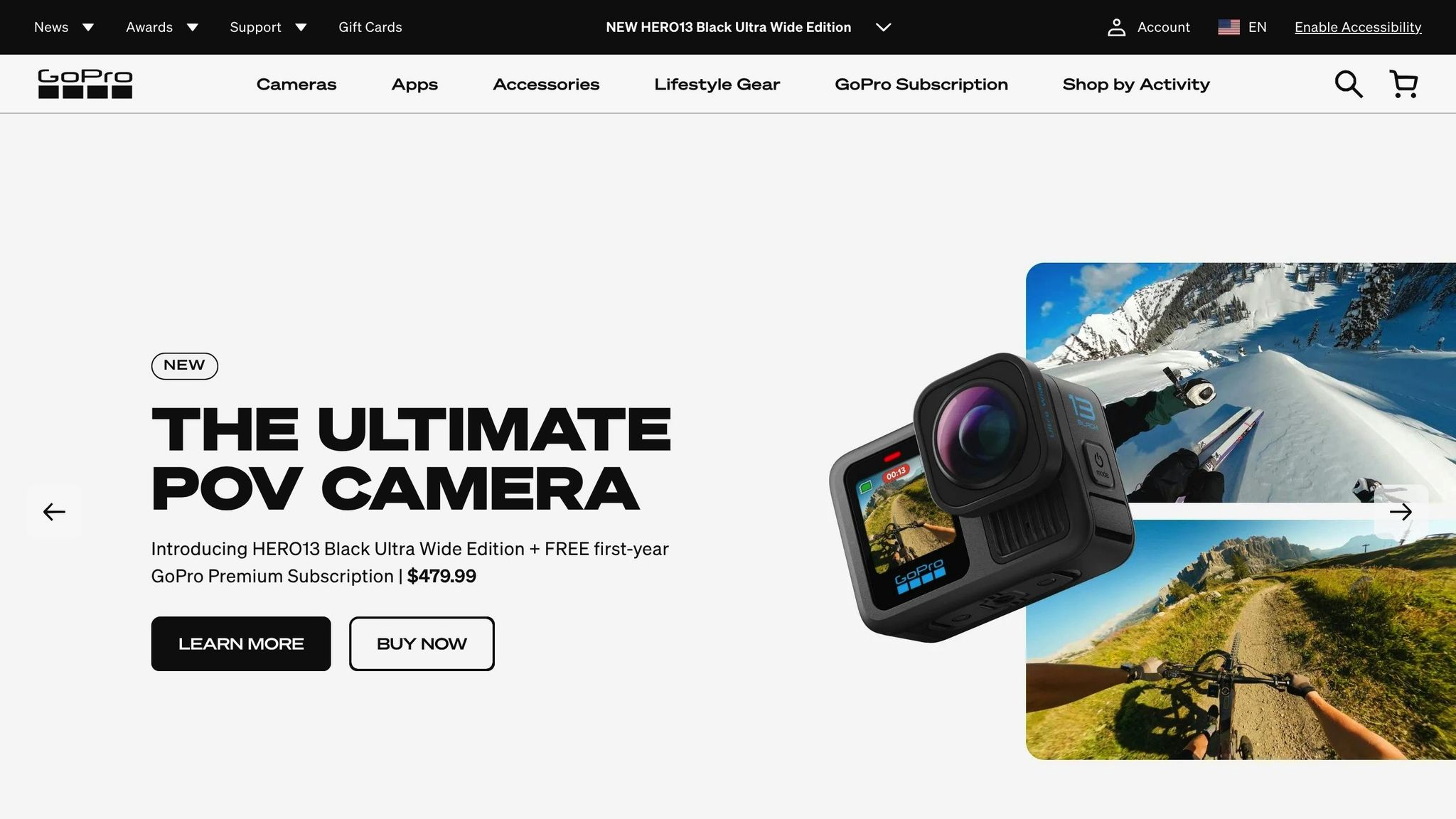
GoPro's 'Million Dollar Challenge' is a prime example of how AI can elevate UGC campaigns. This initiative involved processing thousands of submissions from 170 countries to curate top-tier content. The campaign garnered:
"The submissions we get for this challenge help fuel the next 12 calendar months of content. There are thousands of clips that we use for other platform content."
– Kelly Baker, GoPro's Head of Community Marketing
GoPro has since developed a sophisticated backend system for their awards program. This system automatically categorizes submissions, streamlining content distribution for various marketing channels and improving efficiency.
While GoPro's global reach demonstrates the scale of AI-enhanced UGC, smaller, localized campaigns are also reaping the benefits.
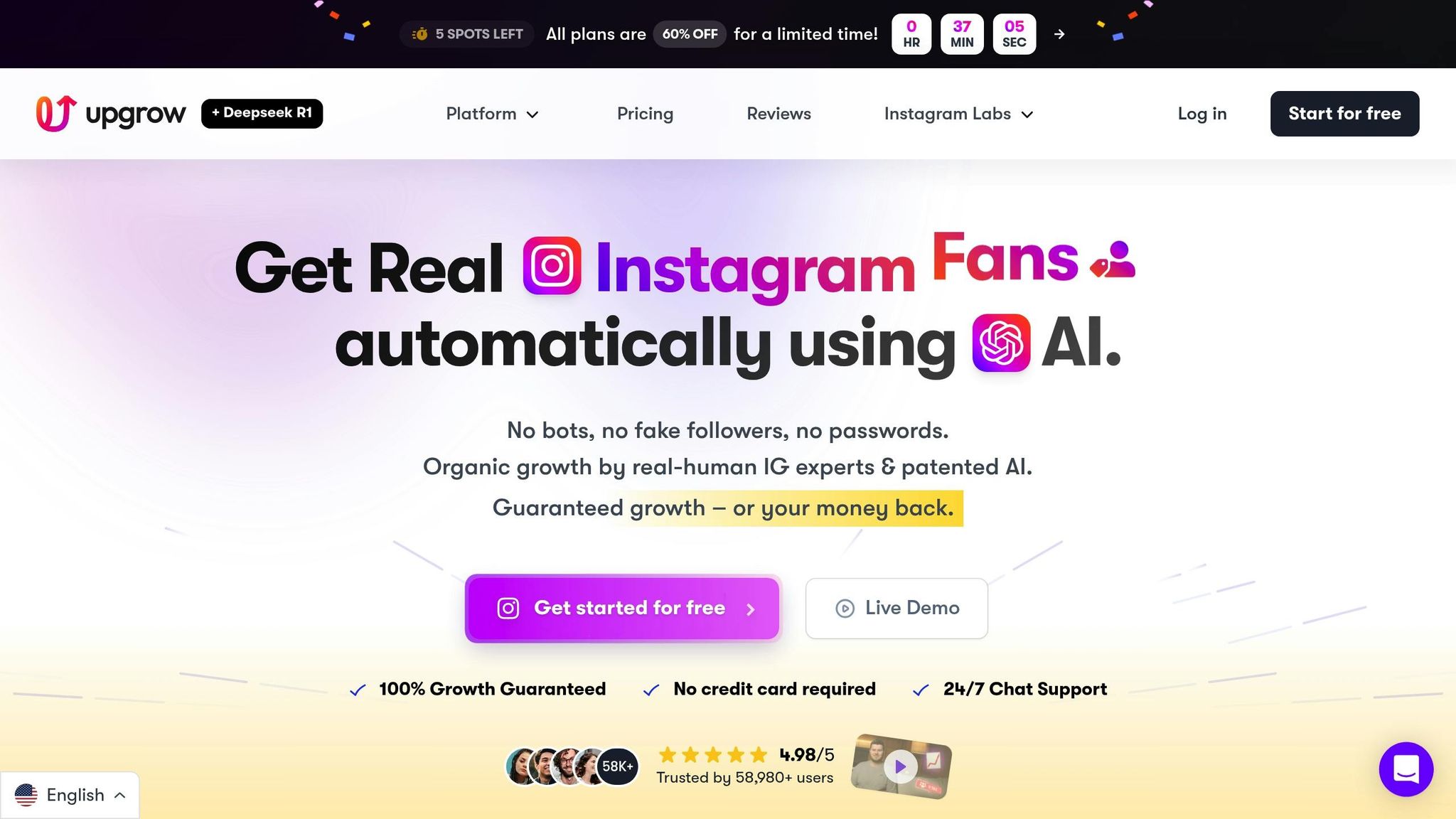
Local businesses using UpGrow's AI-powered targeting tools have seen engagement skyrocket - by as much as 79%. This success stems from features like:
These tools empower local campaigns to connect with their audiences more effectively, proving that AI-driven strategies aren't just for global giants - they work for businesses of all sizes.
AI-powered UGC campaigns are changing the game for brands, offering faster, more scalable, and higher-performing results compared to traditional manual methods.
When comparing AI-driven campaigns to manual ones, the numbers speak for themselves. AI campaigns not only save time but also deliver significantly better outcomes. For instance, web conversions can increase by up to 161% with AI-powered approaches compared to traditional methods.
| Metric | AI-Powered Campaigns | Manual Campaigns | Improvement |
|---|---|---|---|
| Content Activation Time | 60% reduction in time | Baseline | 60% reduction |
| Landing Page Conversions | 20% higher | Baseline | +20% |
| Compliance Review Time | 50% reduction | Baseline | 50% reduction |
| Workflow Automation | 90% automated | Minimal | +90% |
Take, for example, a global sportswear brand that transitioned to AI-powered UGC. They saw 40% higher engagement on campaign landing pages, zero compliance issues, and significantly faster campaign launches. These results reflect not only increased efficiency but also the potential for more personalized and automated campaigns.
AI’s ability to personalize campaigns is another game-changer. When Iconic London utilized AI-powered UGC galleries, the results were staggering: a 126% increase in conversion rates, an 11% boost in average order value, and a 361% rise in time spent on their site.
AI solutions can automate up to 90% of the UGC workflow, streamlining tasks like:
From an ROI perspective, AI-driven influencer marketing campaigns average 13.7% ROI, slightly outpacing the 12.3% ROI of traditional influencer campaigns. However, it’s worth noting that sponsored posts by human influencers still achieve 2.7 times more engagement on average than those created by AI influencers.
Tarte Cosmetics offers a compelling example of blending AI with human creativity. By incorporating AI-powered visual reviews, shoppers interacting with these reviews were twice as likely to convert, and the brand saw a 6% increase in average order value. This balance between automation and human input highlights the importance of maintaining authentic connections with audiences while leveraging the power of AI to optimize results.
The landscape of AI-driven user-generated content (UGC) is evolving at a breakneck pace, with advancements in predictive tools and content customization across platforms leading the charge. By 2026, experts anticipate that 90% of online content could be AI-generated, fundamentally transforming how brands connect with their audiences.
AI is now a critical player in forecasting content success, with 70% of marketers leveraging it for audience segmentation and achieving up to 85% greater accuracy in targeting. By analyzing past engagement trends, these tools identify which UGC pieces are most likely to resonate with specific audiences.
"The real competitive advantage in any business is one word only, which is AI." - Mike Lynch, British technology entrepreneur
A standout example of this in action is Heinz's campaign featuring DALL-E 2. The AI-generated designs for ketchup bottles captured 850 million global impressions and drove a 38% higher engagement rate compared to earlier campaigns.
Looking forward, next-gen prediction tools are set to focus on:
Building on the capabilities of prediction tools, AI is revolutionizing how content is tailored for different platforms. With the rise of diverse social media channels, adapting UGC for various environments is becoming essential. By 2033, 78% of all content is expected to be user-generated, underscoring the importance of efficient cross-platform strategies.
Several advancements are driving this transformation:
These innovations are setting the stage for brands to fully embrace the power of AI-driven UGC, unlocking new ways to engage their audiences and drive meaningful interactions.
AI-powered user-generated content (UGC) has reshaped how brands drive engagement on Instagram, delivering impressive results backed by real-world examples.
Take NYX Cosmetics DE, for instance. By using AI to curate UGC, they saw a 33% boost in likes and a staggering 90% increase in comments. Their focus on localized content paid off with a 25:1 ROI, and they secured usage rights for 92% of the content they featured.
"StoryStream enables us to easily gain rights to German User Generated Content at scale, allowing us to maintain our publishing schedule on our Instagram channel. The platform is easy to use, and we are gathering a lot of high-value content easily, reducing effort and costs of creating additional brand content."
– Victoria Schulz, Social Media Manager
This success story aligns with broader industry trends. A whopping 93% of marketers report that UGC outperforms traditional branded content, and consumers are 63% more likely to make a purchase after encountering user-generated content.
For brands aiming to supercharge their Instagram presence, platforms like UpGrow offer cutting-edge tools to make it happen. With features like smart auto-targeting and language filtering, UpGrow turns AI-powered strategies into measurable growth. During beta testing, its Boost™ feature drove a 275% jump in monthly followers - a clear testament to the power of AI-driven engagement.
AI is reshaping the way brands approach user-generated content (UGC) campaigns by streamlining critical tasks like content curation, moderation, and personalization. Traditionally, these processes required extensive manual effort, but AI changes the game by processing and analyzing vast amounts of data in seconds. This allows brands to quickly identify top-quality UGC that resonates with their target audience, enabling faster and more precise decision-making. Plus, it helps brands stay on top of trends by reacting in real-time.
On top of that, AI-powered tools can significantly enhance audience engagement by delivering content tailored to individual preferences. Campaigns that integrate AI often see much higher engagement rates compared to those relying solely on human input. By combining speed, accuracy, and data-driven insights, AI doesn’t just make UGC campaigns more efficient - it elevates their effectiveness, turning them into a powerful tool for modern marketing.
AI-driven user-generated content (UGC) campaigns have reshaped the way brands engage with their audience, sparking deeper connections and driving measurable results. By tapping into AI technology, companies can analyze and feature genuine customer content that aligns with their audience's preferences, creating a sense of community and encouraging more interaction.
Take Starbucks' "White Cup Contest" as an example. The campaign invited customers to showcase their artistic skills by designing on Starbucks cups. The outcome? A 3% boost in sales during the campaign and a surge in social media activity. Coca-Cola also embraced AI to enhance UGC, customizing and amplifying customer-created content. This effort led to a 20% increase in social media engagement. These examples demonstrate how AI can turn UGC into a dynamic strategy for building brand loyalty and achieving tangible business goals.
Local businesses can tap into AI-powered user-generated content (UGC) tools to craft relatable and engaging content that resonates with their audience. These tools can produce posts, testimonials, and other materials that mirror genuine user experiences, providing businesses with a consistent flow of quality content without relying entirely on organic submissions.
Encouraging customers to share their stories - perhaps through fun social media contests - can help boost brand visibility while creating a stronger sense of community. AI tools can then step in to organize and refine this content, ensuring it reaches its full potential. The result? Higher engagement, deeper customer connections, and a pathway to sustained growth and loyalty.


