
How AI Improves Instagram Location Targeting
Learn how AI enhances Instagram location targeting, optimizing campaigns and boosting engagement through advanced data analysis and real-time adjustments.
Learn how AI enhances Instagram location targeting, optimizing campaigns and boosting engagement through advanced data analysis and real-time adjustments.
4.98 /5 - from 58k reviews
Trusted by 50,000+ creators — get real engagement delivered to your profile in minutes, not days.
AI is transforming Instagram location targeting by helping businesses reach the right audience at the right time. It uses advanced tools to analyze user behavior, predict trends, and optimize campaigns. Here’s what you need to know:
While AI improves precision and efficiency, ethical considerations like privacy and transparency are critical. Companies must ensure user trust by following clear data practices and addressing algorithmic bias. AI-driven location targeting offers a powerful way to connect with audiences, but success depends on balancing technology with responsible marketing practices.
Instagram marketers are taking location targeting to the next level by using advanced AI technologies. With tools like behavioral analysis, predictive analytics, and real-time adaptive learning, AI helps refine strategies and deliver better results.
AI doesn’t just stop at basic demographics - it digs deeper by analyzing user interactions like likes, comments, and shares. This allows marketers to create detailed audience profiles. For example, Fashion Brand Y harnessed AI to personalize ad content and segment audiences more effectively. The result? A 30% boost in engagement and a 20% increase in sales. By combining traditional demographic data with these behavioral insights, brands can craft location-specific campaigns that resonate more with their audiences.
Predictive analytics is like having a crystal ball for your campaigns. Using historical data, it forecasts the best times to post and predicts how content will perform. BeautyCo, for instance, saw a 40% rise in engagement and a 25% sales increase by leveraging these insights. Similarly, FitnessX tailored content to user preferences and location data, achieving 35% higher signup rates compared to traditional methods. These insights allow marketers to stay ahead by fine-tuning campaigns based on projected outcomes.
AI’s ability to process real-time data means campaigns can adapt on the fly. For example, TravelNow used AI for real-time customer interactions, leading to a 50% increase in queries and a 30% rise in bookings. Meanwhile, EcoWear combined targeted ads with influencer partnerships, growing their Instagram following by 45% and boosting sales by 20%. Even scheduling posts can be optimized - PetCarePlus used real-time AI analysis to drive engagement rates up by 60% and saw a 15% increase in service bookings. This adaptability ensures that location-based campaigns evolve alongside audience behavior.
AI has transformed Instagram marketing by delivering results that traditional methods simply can't match. By leveraging advanced tools like AI-driven location targeting, businesses see measurable improvements in engagement, conversions, and return on investment (ROI).
When comparing AI-powered targeting to manual approaches, the differences are striking. Traditional marketing often relies on broad demographics and generalized content. In contrast, AI digs deeper, using data like purchasing habits, behavioral trends, and engagement patterns to create highly specific audience segments. This laser-focused precision directly boosts campaign performance.
Here’s a quick comparison of the two approaches:
| Metric | AI-Driven Targeting | Manual Targeting | Key Advantage |
|---|---|---|---|
| Audience Precision | Targets micro-segments using behavioral data | Relies on broad demographic categories | Pinpoints niche audiences overlooked by manual methods |
| Campaign Optimization | Adapts in real time | Requires periodic manual updates | Responds instantly to performance changes |
| Resource Efficiency | Automates scheduling and analysis | Demands time-intensive manual monitoring | Frees up time for strategic tasks |
| ROI Improvement | Boosts ROI through better targeting | Limited by human data processing | Processes large-scale data for actionable insights |
AI doesn’t just improve targeting - it automates key tasks like scheduling, content creation, and performance analysis. This automation reduces labor costs and allows marketing teams to focus on crafting strategies rather than getting bogged down in execution.
AI takes Instagram marketing to the next level by delivering highly personalized campaigns. Unlike manual methods, AI tailors ad messages to individual preferences and behaviors, adjusting elements like copy and visuals to resonate with specific users. By combining behavioral insights with location data, AI ensures the right message reaches the right person at the perfect time - leading to higher engagement and conversion rates.
One standout advantage is AI’s ability to tweak campaigns on the fly. Real-time analytics allow marketers to adjust ad variables within hours, maximizing performance without delay. AI-powered tools like chatbots further enhance the customer experience by streamlining interactions, building loyalty, and encouraging repeat purchases. From the first touchpoint to the final sale, AI creates a seamless and efficient marketing journey.
AI has taken Instagram location targeting to the next level, offering marketers tools that go far beyond traditional methods. These tools use machine learning and real-time data to refine strategies, ensuring campaigns reach the right people in the right places.
AI-powered tools for Instagram location targeting bring unique capabilities to the table. They allow marketers to filter audiences based on geographic and local interests while keeping a close eye on engagement and conversion metrics. This real-time monitoring enables quick adjustments to campaigns for better results.
One standout feature is behavioral analysis, which identifies trends and preferences unique to specific locations. This data helps marketers tailor their content strategies to resonate with local audiences. Predictive analytics is another key function, using historical data and current trends to forecast which locations are likely to generate the highest engagement.
Among these tools, UpGrow is a prime example of how AI is reshaping Instagram location targeting.
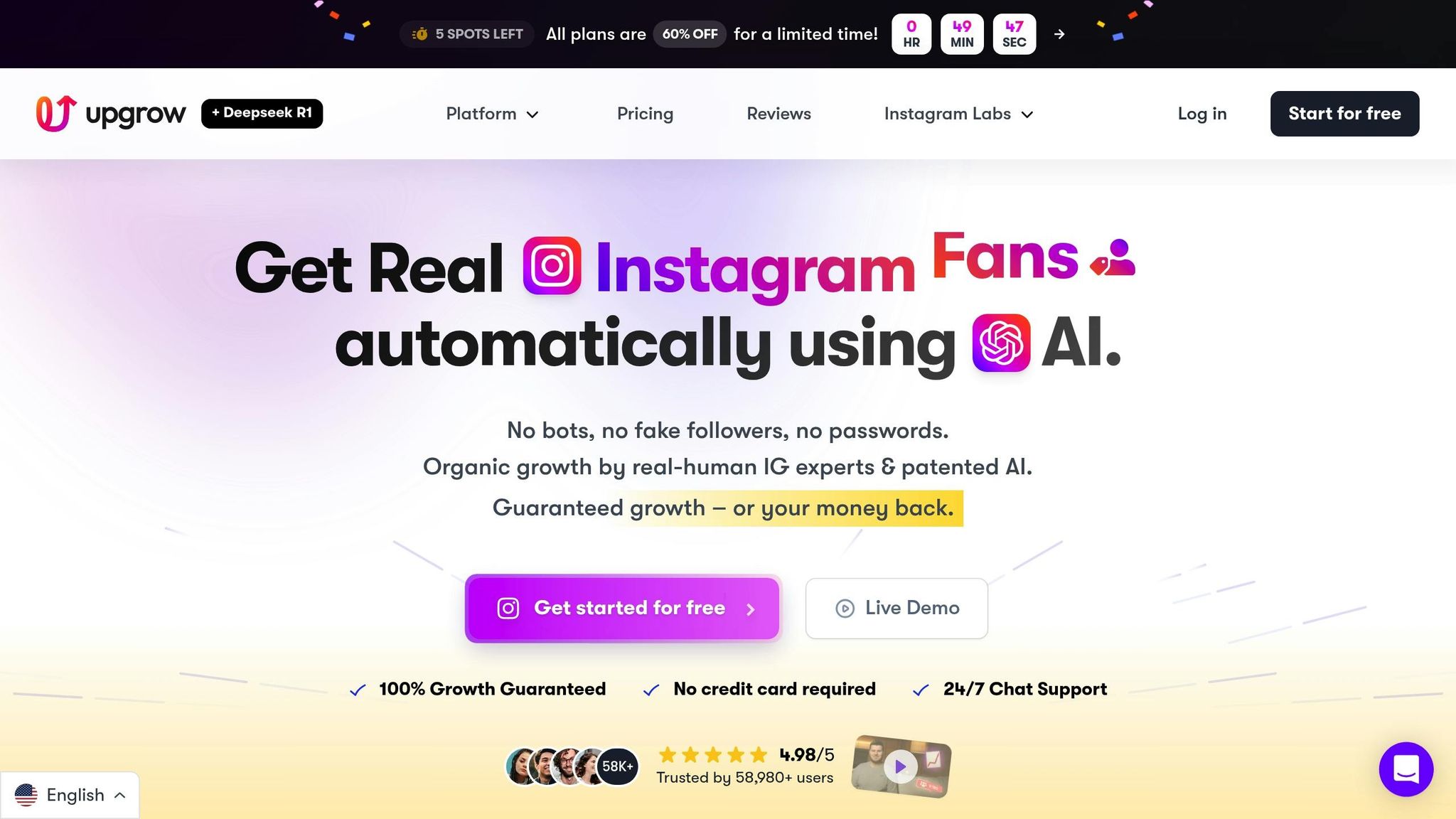
UpGrow has carved out a niche in the Instagram growth space with its patented AI technology. The platform’s smart targeting system allows users to create highly specific audience segments by filtering followers based on location, age, gender, language, and interests. This precision drives meaningful engagement.
"Organic growth by real-human IG experts & patented AI."
One of UpGrow’s standout features is its live dashboard, which provides real-time insights into location-based performance. This enables marketers to tweak their strategies on the fly for maximum impact.
The platform’s Boost™ feature has delivered impressive results. Beta users have reported a 275% increase in monthly followers through UpGrow’s AI-assisted location targeting. Additionally, the AI helps determine the best content themes, posting schedules, and engagement strategies to connect with local audiences effectively.
UpGrow also ensures compliance with Instagram’s policies, focusing on sustainable and organic growth. With over 58,980 users trusting the platform, it has become a go-to solution for businesses aiming to amplify their Instagram presence without the need for a full social media team.
To top it off, UpGrow offers downloadable analytics reports that break down follower acquisition by location. These reports give marketers the data they need to continually refine their strategies and achieve better results.
AI-driven location targeting on Instagram opens up new possibilities for marketers but also brings significant privacy and ethical concerns to the forefront. As companies gather and analyze massive amounts of personal data, they face challenges like securing user consent, ensuring transparency, and addressing fairness in algorithms.
One major issue lies in processing location data. These systems use GPS coordinates, Wi‑Fi connections, and social media check‑ins to uncover patterns and trends. While this boosts targeting accuracy, it also involves managing sensitive information that could expose users' daily routines and physical locations.
Transparency is a non-negotiable. Neil Sahota, writing for Forbes, emphasizes:
"Ensuring users are aware of and consent to the extent of data collection and analysis being conducted is critical. This includes transparent policies and the option for users to control their data and opt out of certain types of data collection."
In response, global privacy laws now mandate that companies disclose how personal information is collected and secure additional consent for any previously unmentioned AI applications.
Another ethical challenge is algorithmic bias. AI systems can unintentionally reinforce a lack of diversity in recommendations. Overreliance on these technologies may also create "filter bubbles", narrowing users’ exposure to diverse content.
To address these challenges, marketers must weave strong ethical practices into their AI strategies. Balancing effective campaigns with user privacy requires adopting privacy-by-design principles, offering clear opt-in options, and establishing robust data deletion protocols. These steps empower users to maintain control over their personal information.
Regular audits play a key role in upholding ethical standards. Businesses should evaluate their AI systems to understand their social, ethical, and environmental impact. This includes scrutinizing training data for potential biases. Proactive measures like these help prevent discrimination and preserve user trust. A notable example occurred in 2021, when a privacy-related incident led to stricter industry regulations.
While AI undoubtedly sharpens targeting precision, it’s trust that keeps users engaged. According to Salesforce, 76% of consumers expect companies to understand their needs. When users feel confident that their data is handled responsibly, they’re more likely to interact genuinely with location-based campaigns. This creates a positive cycle where ethical practices and user engagement feed into each other.
As AI continues to advance, ethical safeguards will remain critical to fostering meaningful user connections. The future of AI location targeting will hinge on blending cutting-edge technology with a commitment to transparency and responsibility. Companies that prioritize these values are poised for stronger, more sustainable growth in the long run.
AI is reshaping location targeting by combining precise geographic segmentation with insights into user behavior - something manual methods just can't achieve. This technology allows marketers to pinpoint specific locations while factoring in behavioral patterns and demographics, making campaigns more relevant and effective.
Here’s a compelling stat to consider: 80% of Instagram users follow at least one business, and the platform boasts a 2.2% interaction rate, significantly higher than Facebook's 0.22%. With such an engaged audience, AI-driven targeting ensures the right message reaches the right people, in the right place, at the right time.
What sets AI apart is its ability to learn and adapt in real time. Unlike traditional methods that rely on static audience definitions, AI continuously refines its targeting by analyzing user behavior, location trends, and engagement data. This dynamic approach not only boosts engagement but also drives higher conversion rates.
A growing trend, especially among small and medium-sized businesses, is the move toward hyper-localized campaigns. By combining location data with demographic insights, businesses can create campaigns that resonate deeply with their target audience.
Take UpGrow, for example. This platform leverages AI-powered tools to seamlessly integrate location filters with demographic and behavioral data. The result? Organic follower growth through precise audience targeting. It’s a clear example of how AI simplifies and optimizes the targeting process.
However, success in this space isn’t just about the technology - it’s about using it responsibly. Marketers who pair AI’s cutting-edge precision with ethical and transparent data practices will not only enhance their campaigns but also build stronger, trust-based connections with their audiences. Striking this balance is key to crafting innovative and compliant marketing strategies.
For businesses ready to take advantage of AI location targeting, the roadmap is clear: combine geo-targeting with demographic filters, encourage the use of location tags and branded hashtags, and choose AI-driven tools that prioritize both performance and adherence to Instagram's guidelines.
AI takes Instagram's location targeting to a whole new level by leveraging advanced algorithms to process user behavior, preferences, and location data in real-time. This means businesses can connect with highly specific audiences using geographic filters, ensuring their content reaches the right people at just the right moment.
Unlike older, more static methods, AI-powered tools adjust on the fly, offering personalized targeting that boosts engagement and enhances campaign performance. With options like precise location filters, demographic targeting, and actionable insights, marketers can achieve sharper, more impactful results with less guesswork.
When leveraging AI for Instagram location targeting, businesses need to put user privacy and data security front and center. This means responsibly collecting and using location data while adhering to data protection regulations like GDPR and CCPA. It's equally important to be upfront about how user data is managed, ensuring transparency and trust.
Another critical aspect is tackling algorithm bias to promote fair targeting. Conducting regular audits can help identify and address any biases in AI systems. Being transparent about how AI shapes targeting decisions can go a long way in building user trust and avoiding concerns about manipulation.
By committing to ethical practices, businesses can safeguard consumer trust while using AI to enhance location-based targeting strategies.
Small businesses have a powerful tool at their disposal with AI-powered location targeting on Instagram. This technology enables businesses to create content that's highly relevant to users based on their geographic location. By analyzing location data, AI helps businesses craft ads, captions, and promotions that align with the interests and needs of local audiences, driving both engagement and conversions.
What’s more, AI tools allow businesses to tweak their campaigns in real time. This means messaging can stay fresh and effective, adapting to changing circumstances or audience behaviors. The result? A stronger connection with the community and a better return on investment by reaching the right people at the right moment.


